What My Argentine Grandfather Taught Me About Knives
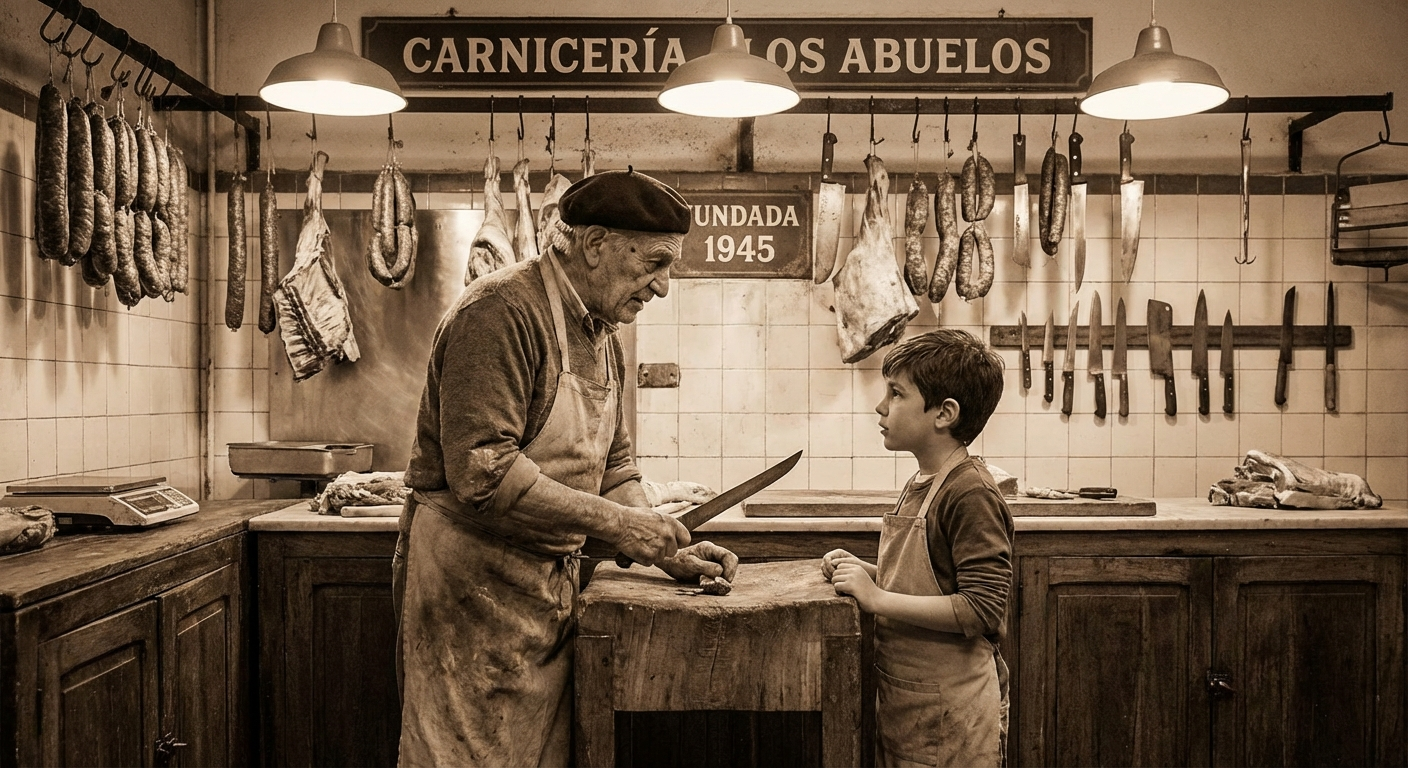
My first memory of my grandfather's carnicería in the San Telmo district of Buenos Aires isn't of the meat hanging in the cooler or the customers lined up for his asado-grade cuts. It's of his hands, weathered and strong, carefully stropping his cuchillo every morning before the shop opened.
"Hija, antes de tocar la carne, debes conocer tu cuchillo," he would say — "daughter, before you touch the meat, you must know your knife." I was seven years old, barely tall enough to see over the counter, but those words would shape my understanding of butchery for the next thirty years.
The Ritual of Preparation
Every morning at 5 AM, before the choripán vendors and parrilladas began arriving, Abuelo Miguel performed the same ritual. He would take his main working knife — a worn but perfectly balanced 10-inch breaking knife he'd inherited from his own master — and begin the careful process of maintenance.
First, the visual inspection. He would run his thumb along the spine, checking for any nicks or irregularities. Then, the edge assessment — not by touching it, but by holding it to the light and looking for any inconsistencies in the reflection.
"Una cuchilla bien cuidada te durará toda la vida," he would murmur. A well-cared-for blade will last your entire life. In those early morning moments, I learned that respect for the craft began with respect for the tools.
The Language of Steel
My grandfather spoke to his knives. Not literally, but with a tenderness and attention that seemed to border on reverence. He understood that each blade had its own personality, its own "sweet spot" where the weight and balance felt perfect in his grip.
He taught me to listen to the knife — to understand when it was sharp by the way it moved through meat, when it needed attention by the resistance it offered, and when it was truly singing by the clean, effortless cuts it made.
"El acero tiene memoria," he would say. Steel has memory. He meant that a blade remembers how it's treated. Treat it roughly, and it will perform roughly. Care for it with attention and respect, and it will reward you with years of faithful service.
The Morning Strop
After inspection came the strop. Not a quick swipe or two, but a deliberate, meditative process. He would charge his leather strop with a particular honing compound — a mixture he kept secret, though I suspect it was simply a high-quality chromium oxide paste.
Twenty passes in one direction, twenty in the other, at exactly the same angle he'd used when sharpening. The rhythm was hypnotic, and I realized years later that it was also meditative — a moment of mindfulness before the day's work began.
"La afilación es una oración," he told me once. Sharpening is a prayer. In that moment, the butcher and the blade become one, focused on a single, perfect edge.
Lessons Beyond the Blade
What my grandfather taught me about knives was really about respect — for the tools, for the craft, for the animal, and ultimately for the people who would consume what we prepared.
He showed me that a dull knife is more dangerous than a sharp one, not just because it slips, but because it forces you to apply more pressure, to work harder, to lose the delicate touch that defines skilled butchery.
He demonstrated that the way you treat your tools reflects the way you approach your work. A knife left to rust or stored carelessly would perform poorly and disappoint you when you needed it most.
The Legacy Continues
Today, when I teach classes in my workshop in Austin, I still hear my grandfather's voice. I still follow his morning ritual, though now I'm working with a collection of Japanese and German blades that he never could have imagined.
But the principles remain the same: inspect your tools before use, maintain them with care, and approach each cut with the respect that the craft demands. The knife is not just an extension of your hand — it's an extension of your commitment to excellence.
My grandfather passed away fifteen years ago, but his lessons live on in every careful cut I make, every blade I maintain, and every student I teach. In the carnicería, we don't just prepare meat — we honor tradition, respect craft, and carry forward the wisdom of those who came before us.
That's what my grandfather taught me about knives. It just took me twenty years to understand that he was really teaching me about life.
More from the Blog
The 3 Knives Every Home Cook Actually Needs
Forget the knife block sets — a master butcher reveals the three essential knives that will serve every home cook's needs effectively.
Why I Refuse to Use Electric Knife Sharpeners
A master butcher explains why electric sharpeners damage knives and compromise edge quality compared to traditional sharpening methods.