How to Order Meat Like a Pro: Butcher Counter Communication Guide
How to Order Meat Like a Pro: Butcher Counter Communication Guide
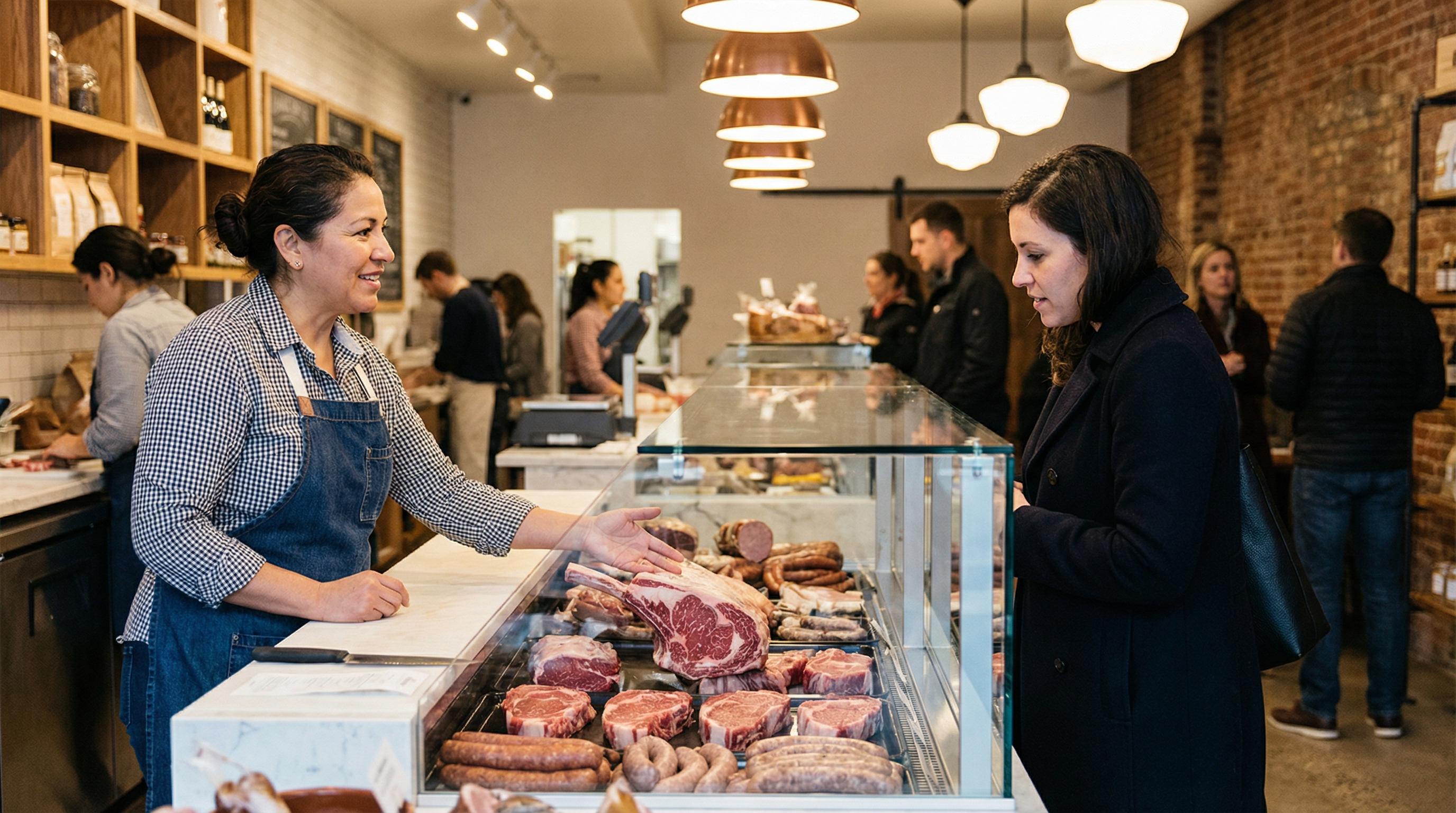
You walk up to the butcher counter. Behind the glass are dozens of cuts — some familiar, others mysterious. The butcher looks up expectantly. And suddenly your mind goes blank. What do you even call that cut? How thick should it be? Should you ask for it bone-in or boneless?
I have spent two decades behind butcher counters in Buenos Aires and the Basque Country. I can tell you: butchers love customers who know what they want and how to ask for it. Clear communication gets you exactly the cut you need, prepared the way you want it, often with helpful advice thrown in for free.
This guide teaches you the essential terms and phrases that will make you sound (and order) like a professional chef. No more pointing awkwardly at the display case. No more settling for "close enough." You will walk away with exactly what you came for.
Know Your Primals: The Foundation of Every Order
Before you can order a specific steak or roast, you need to understand where it comes from. Beef is divided into eight major sections called primal cuts. These are the large pieces the butcher receives from the packing plant before breaking them down further.
The eight beef primals you need to know (based on the USDA Institutional Meat Purchase Specifications):
- Chuck (shoulder): Flavorful, well-marbled cuts best for slow cooking or grinding. Ask for: "chuck roast," "flat iron steak," "chuck short ribs."
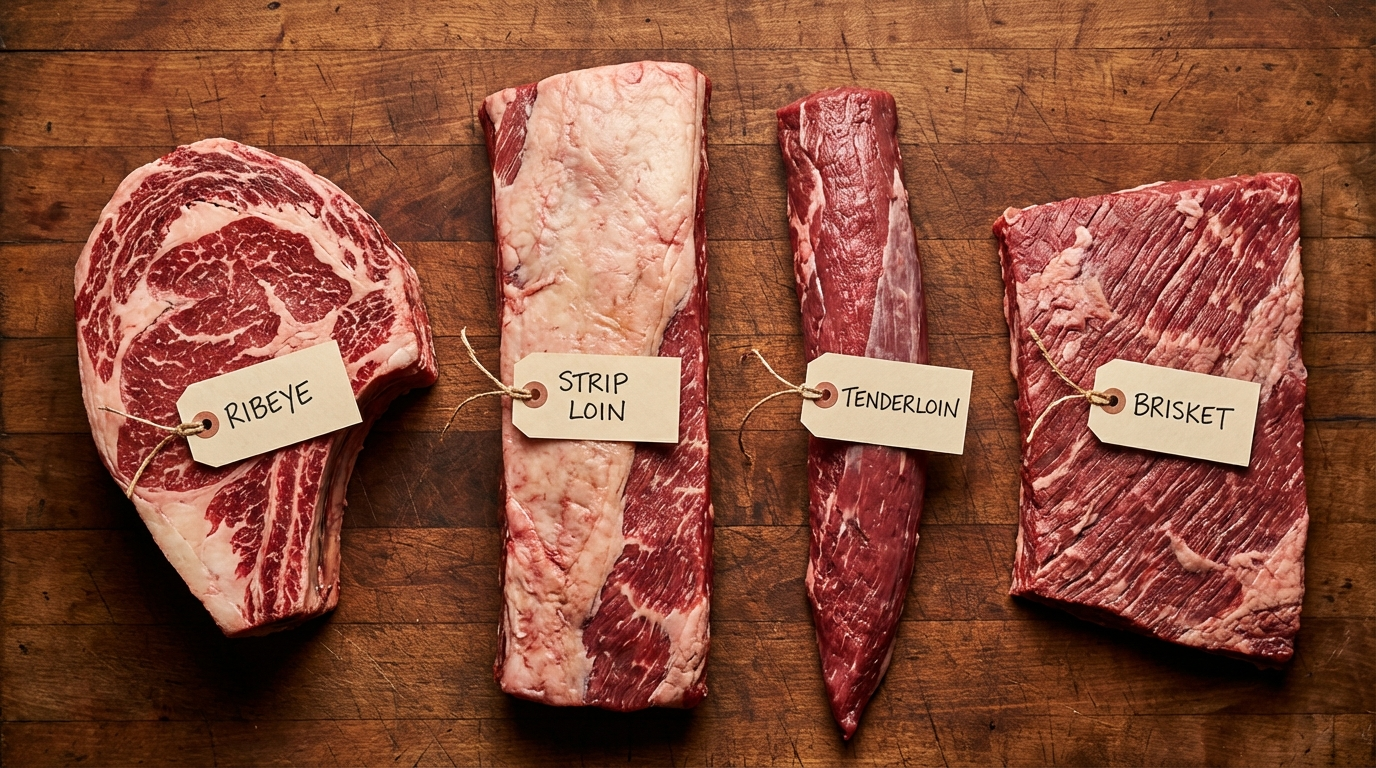
- Rib: Premium section producing the most marbled steaks. Ask for: "ribeye," "rib roast," "back ribs."
- Loin (short loin): Home of the most tender cuts. Ask for: "strip steak," "T-bone," "porterhouse," "tenderloin."
- Sirloin: Leaner but flavorful cuts from the hip. Ask for: "top sirloin," "tri-tip," "sirloin steak."
- Round (hindquarter): Lean cuts from the rear leg. Ask for: "top round roast," "eye of round," "bottom round."
- Brisket (chest): The BBQ king — one large, tough muscle perfect for smoking. Ask for: "whole packer brisket," "flat," "point."
- Plate (short plate): Below the ribs, source of skirt and hanger. Ask for: "short ribs," "skirt steak," "hanger steak."
- Flank (belly): Thin, fibrous cuts with intense flavor. Ask for: "flank steak," "flap meat."
Pro tip: When asking about a cut you are not sure about, reference the primal first. "Do you have any good roasts from the chuck?" or "What cuts from the loin do you have today?" This shows you understand the basics and opens up a real conversation about what is fresh and what will work for your needs.
Steak-Ordering Vocabulary
Ordering a steak is more than just saying "I will take a ribeye." Professional butchers and chefs use specific modifiers to get exactly what they want.
Thickness Matters
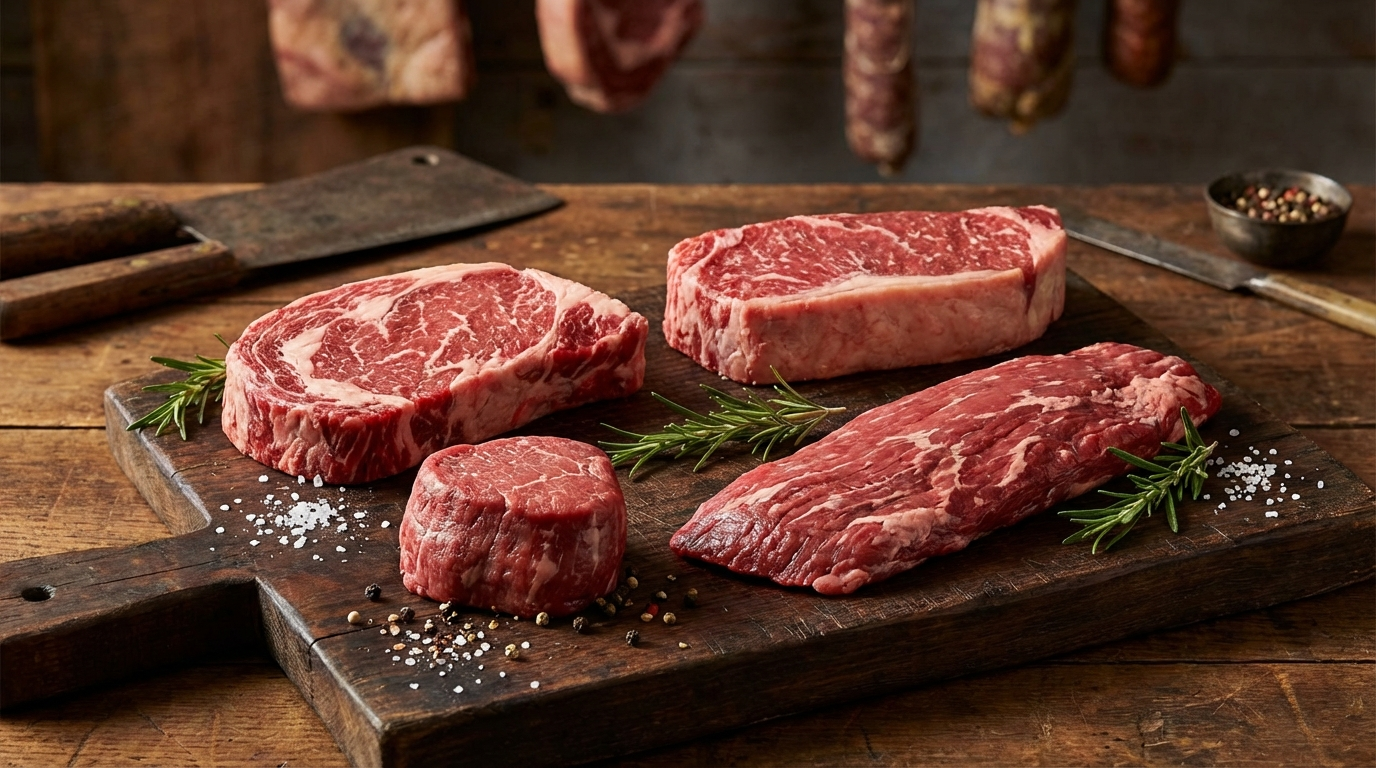
Never leave thickness to chance. Specify in inches, not vague terms like "thick" or "thin." (USDA safe cooking temperatures apply to all cuts regardless of thickness.)
- "I would like a 1-inch ribeye" — Standard thickness for pan-searing or grilling (12-14 oz)
- "Cut me a 1.5-inch strip steak" — Ideal for reverse-searing or sous vide (16-20 oz)
- "Can I get a 2-inch porterhouse?" — Steakhouse style, perfect for sharing (24-32 oz)
If you want your steak portioned by weight instead: "Can I get a 12-ounce ribeye, about 1 to 1.25 inches thick?"
Bone-In vs. Boneless
- "Bone-in ribeye" — More flavor, dramatic presentation, slightly longer cooking time
- "Boneless strip" — Easier to cook evenly, no waste
- "Frenched" — Rib bone cleaned of meat and fat for presentation (common with tomahawk steaks or rack of lamb)
When in doubt, ask: "Do you recommend bone-in or boneless for [your cooking method]?" A good butcher will steer you right.
Special Requests
Do not be shy about asking for what you need:
- "Can you cut that thicker/thinner for me?" — Most butchers are happy to customize
- "I would like the fat cap trimmed to about a quarter inch" — Specifying fat thickness prevents waste and ensures proper searing
- "Can you remove the silverskin?" — Tough connective tissue that does not break down; worth asking to have removed from tenderloins, ribs, or any visible silver membrane
- "Do you have any dry-aged ribeyes?" — Aged beef has concentrated flavor and commands a premium
Roast-Ordering Vocabulary
Roasts require different terminology because they are intended for different cooking methods.
Size and Weight
Specify how many people you are feeding or the weight you need:
- "I need a chuck roast for six people" — Plan roughly 8 oz per person, so a 3-4 lb roast
- "Can I get a 5-pound prime rib roast?" — Feeds 8-10 people
- "What is the smallest tenderloin you have?" — Whole tenderloins range from 4-7 lbs; a small one feeds 6-8
Bone-In Roasts
Bone adds flavor and helps regulate heat, but also adds weight you do not eat.
- "Standing rib roast, bone-in" — Classic prime rib with bones left on for flavor and presentation
- "Can you leave the bones on but French them?" — Bones cleaned of meat for elegant presentation
- "Bone-in leg of lamb, aitch bone removed" — Easier to carve without the hip bone
Tied vs. Untied
Butchers can tie roasts with twine to ensure even cooking and maintain shape.
- "Can you tie this roast for me?" — Especially useful for boneless roasts that might fall apart during cooking
- "Rolled and tied pork loin" — Keeps stuffing inside and creates uniform thickness
Trim Talk: How to Specify Fat and Connective Tissue
Fat is flavor. But too much fat prevents proper searing and wastes money. Here is how to specify what you want:
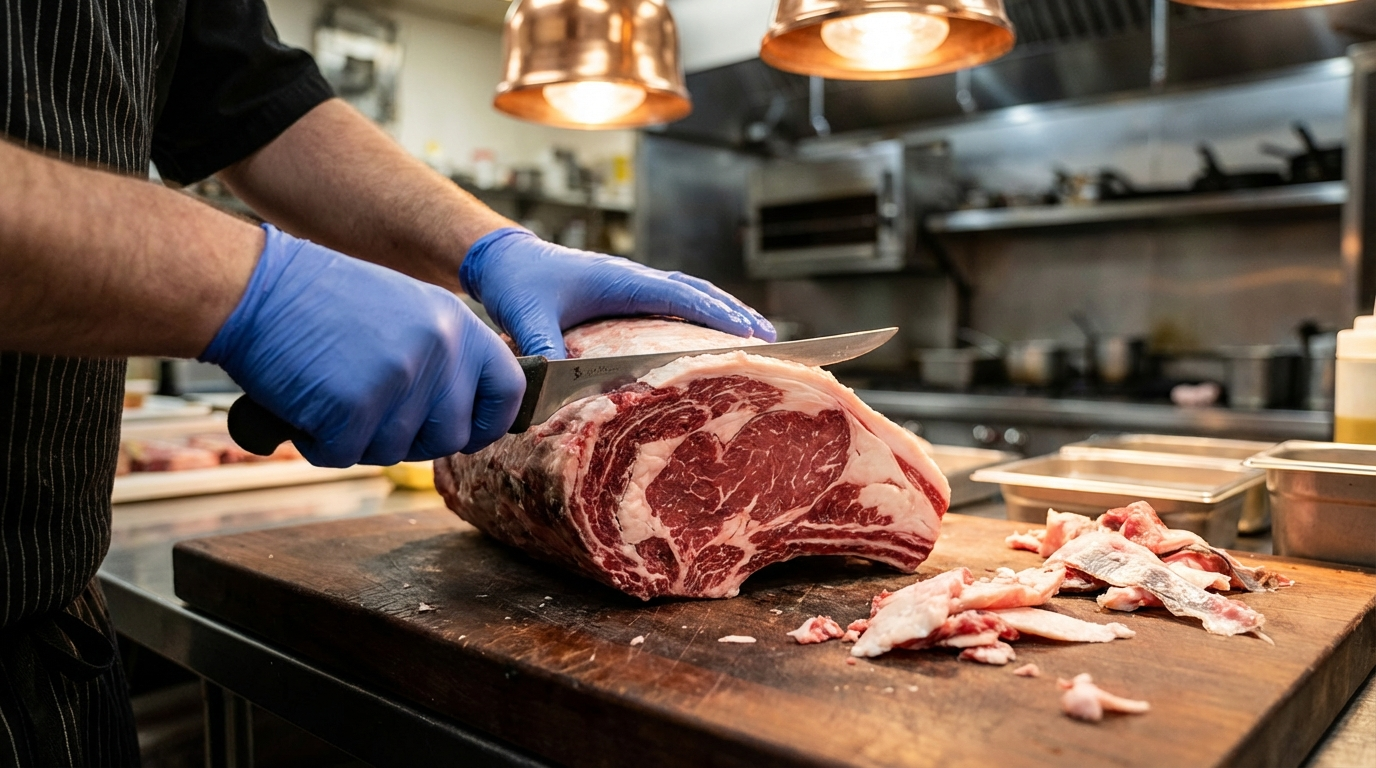
- "Trimmed to a quarter inch of fat" — Standard for most steaks and roasts; enough for flavor, not so much it gets in the way
- "Leave the fat cap on" — For brisket, pork shoulder, or any cut you plan to smoke or slow-roast; the fat bastes the meat
- "Can you remove the silverskin?" — Tough silver membrane that does not break down; must be cut away before cooking
- "Denuded" — Professional term meaning all external fat and silverskin removed; common for tenderloins being portioned into filets
Pro tip: If you are grinding your own burger or making sausage, ask for the trim: "Can I have the trimmings from that roast?" Many butchers sell trim at a discount, and it is perfect for grinding.
Ground Beef: Knowing Your Ratios
Not all ground beef is created equal. The ratio of lean to fat determines texture, juiciness, and flavor. According to USDA food safety guidelines, ground beef should be cooked to 160°F internal temperature regardless of fat ratio.
- "80/20 ground chuck" — 80% lean, 20% fat; the classic burger grind
- "85/15 ground round" — Slightly leaner for tacos or pasta sauce
- "90/10 ground sirloin" — Very lean; can be dry for burgers but works for bolognese
- "Can you grind this chuck roast for me at 80/20?" — Custom grinding from whole muscle ensures freshness
Pro tip: Fresh-ground beef from whole muscle is significantly better than pre-ground. If you see a butcher with a grinder, ask: "Do you grind to order?" Many will grind a chuck roast or short rib into burger on the spot.
How to Ask for Custom Fabrication
A good butcher shop will break down larger cuts for you if you ask. This often saves money compared to buying individual steaks.
Buying a Whole Sub-Primal
- "Do you sell whole strip loins?" — A whole strip loin (10-14 lbs) can be portioned into 12-16 steaks at significant savings
- "Can I buy a whole tenderloin and have you cut it into filets?" — Often 30-40% cheaper than buying individual filets
- "What is your price on a whole ribeye roll?" — "Roll" means boneless; if you want bones, ask for "bone-in rib primal"
Custom Portioning
- "Can you portion this into 1.5-inch steaks?" — Specify thickness to get consistent cuts
- "I would like half cut into steaks and half left as a roast" — Maximize versatility
- "Can you butterfly this for me?" — Cutting nearly through the middle and opening like a book for stuffing
Asking Smart Questions
The best way to learn is to engage your butcher. Here are questions that show you are serious and will often get you valuable insights:
- "What is the best cut from the chuck for pot roast?" — Opens a conversation about muscle-specific characteristics
- "Which of these steaks has the most marbling?" — Shows you understand quality factors
- "Is this dry-aged or wet-aged?" — Demonstrates knowledge of aging methods
- "What do you recommend for [specific cooking method]?" — Lets the butcher show expertise
- "Do you have any off-cuts or trim I can buy for grinding?" — Shows resourcefulness and interest in value
Terms That Show You Know Your Stuff
Drop these into conversation and your butcher will know you are not a beginner:
- "Do you have any hanger steak today?" — The "butcher's steak," often kept aside
- "Can I see your flat iron steaks?" — A newer cut that shows you know about seam-cut innovations
- "I am looking for a well-marbled chuck-eye steak" — The "poor man's ribeye," from the chuck end of the rib primal
- "Do you carry short ribs cut English-style or flanken-style?" — Two different cutting methods for short ribs
- "Can you show me where the rib cap is on this ribeye?" — The spinalis dorsi, the most prized muscle on the steer
What NOT to Say
Avoid these phrases that mark you as uncertain or difficult:
- "Give me a good piece of meat" — Too vague; specify cut, thickness, and intended use
- "I want it well done but still juicy" — Cooking instructions, while well-meaning, do not help the butcher cut your meat better
- "Just give me whatever is cheapest" — Different cuts serve different purposes; cheap is not always right
- "I do not care, you pick" — A good butcher will ask questions to guide you; provide information about your needs
Putting It All Together: Sample Orders
Here is how a professional would order at a butcher counter:
Beginner order:
"Hi, I need a ribeye steak for tonight, about 1 to 1.5 inches thick. Bone-in if you have it. And can you trim the fat to about a quarter inch?"
Intermediate order:
"Do you have any dry-aged strip steaks? I am looking for two steaks, 1.5 inches thick, boneless, with the fat cap trimmed down. And while you are cutting those, can I also get a pound of 80/20 ground chuck?"
Advanced order:
"I am looking for a whole ribeye roll to portion myself. What is your price per pound? ... Great. Can you remove the deckle and give me the roll denuded? And I will take the deckle separately — I am planning to smoke it. Also, do you have any hanger steak or flat iron available today?"
Build a Relationship
The best thing you can do at a butcher counter is become a regular. Learn your butcher's name. Ask questions. Share what you are making. A butcher who knows you will:
- Set aside special cuts when they come in
- Give you heads-up on sales and specials
- Offer trim or bones for stock at little or no cost
- Share cooking advice and recipes
- Custom-cut exactly what you need without charging extra
Walking up to the counter and being greeted by name, with your butcher already reaching for the cut you usually get — that is when you know you have arrived.
Mastering butcher counter terminology is not about showing off. It is about precision. When you can clearly communicate what you want, you get better meat, prepared exactly how you need it, often with helpful guidance from someone who has spent a career working with these cuts. That is the difference between an okay dinner and an extraordinary one.
Now go forth and order with confidence. Your butcher is waiting. And if you want to practice your new vocabulary on premium cuts, The Meatery offers online ordering with detailed cut descriptions for every product.
For more in-depth definitions and technical terms, see our comprehensive Butchering Terms Glossary.
Frequently Asked Questions
How do I ask for a specific steak thickness at the butcher counter?
Specify thickness in inches, not vague terms. Say "I would like a 1.5-inch ribeye" or "Can you cut me a 2-inch strip steak?" If ordering by weight, add "about [thickness] thick" to ensure you get the right proportions.
What does "denuded" mean when ordering meat?
Denuded means all external fat and silverskin have been removed from the cut. This term is common for tenderloins being portioned into filet mignon steaks. It is a professional butchery term that shows you know what you want.
Should I ask for bone-in or boneless steaks?
Bone-in steaks have more flavor and dramatic presentation but take slightly longer to cook evenly. Boneless cuts are easier to cook and have no waste. Ask your butcher which they recommend for your intended cooking method — pan-searing, grilling, or reverse-searing.
How do I ask a butcher to trim fat on my steak?
Specify the thickness: "Can you trim the fat to about a quarter inch?" is standard for most steaks. For smoking or slow-roasting (like brisket or pork shoulder), say "Leave the fat cap on." For tenderloins, ask to "remove the silverskin" — the tough silver membrane.
What is the difference between 80/20 and 85/15 ground beef?
80/20 is 80% lean meat and 20% fat — the classic burger grind that stays juicy. 85/15 is slightly leaner, better for tacos or sauces. 90/10 is very lean and can be dry for burgers. Always ask for fresh-ground from whole muscle if available.
Can I ask a butcher to custom-cut a large piece of meat?
Yes! Most butchers will portion whole sub-primals (strip loins, tenderloins, ribeye rolls) into steaks for you. Ask "Do you sell whole strip loins?" or "Can I buy a whole tenderloin and have you cut it into filets?" This often saves 30-40% compared to buying individual steaks.
What questions should I ask at the butcher counter?
Ask: "What is the best cut from [primal] for [cooking method]?" "Which of these has the most marbling?" "Is this dry-aged or wet-aged?" "Do you have any off-cuts or trim for grinding?" These questions show you are knowledgeable and open up valuable conversations.
What are the eight beef primal cuts?
The eight beef primals are chuck (shoulder), rib, loin (short loin), sirloin, round (hindquarter), brisket (chest), plate (short plate), and flank (belly). Knowing these helps you navigate the butcher case and ask informed questions about where cuts come from.
More Expert Guides
How to Set Up a Home Butcher Shop: Complete Space, Equipment & Workflow Guide
Setting up a dedicated home butcher shop transforms meat processing from a messy kitchen chore into efficient, professional-quality work. Here is everything you need to design your space, choose equipment, and establish safe workflows.
11 min readHow to Wrap and Package Meat Like a Professional Butcher
Proper meat wrapping is just as important as proper cutting. A perfectly trimmed ribeye or pork chop loses quality fast if wrapped poorly. After three decades wrapping thousands of pounds of meat, I can tell you: technique matters more than materials.
10 min readHow to Choose a Meat Cleaver: Weight, Steel, and What Actually Matters
Buying your first meat cleaver shouldn't be complicated, but the market is full of confusing options. After three decades using every type of cleaver imaginable, I can tell you what actually matters—and what's just marketing. This guide will save you from expensive mistakes.