Home Butchering Equipment: The Complete Starter Guide
Home Butchering Equipment: The Complete Starter Guide
Whether you are processing a deer from hunting season, breaking down a whole hog from a local farm, or simply want to save money by buying primals and cutting your own steaks, having the right equipment makes the difference between a frustrating mess and clean, professional results.
The good news: you do not need a commercial butcher shop to do excellent work at home. A handful of quality tools, a solid work surface, and some basic knowledge will get you through 90% of home butchering tasks.
The Essential Knives (Start Here)
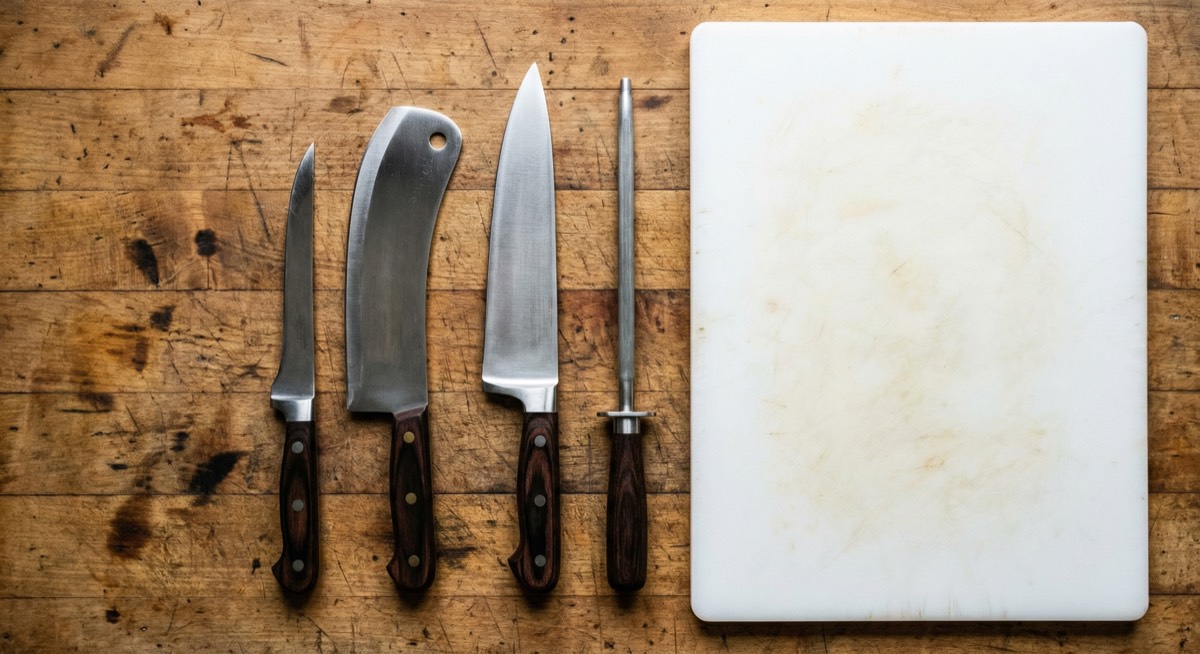
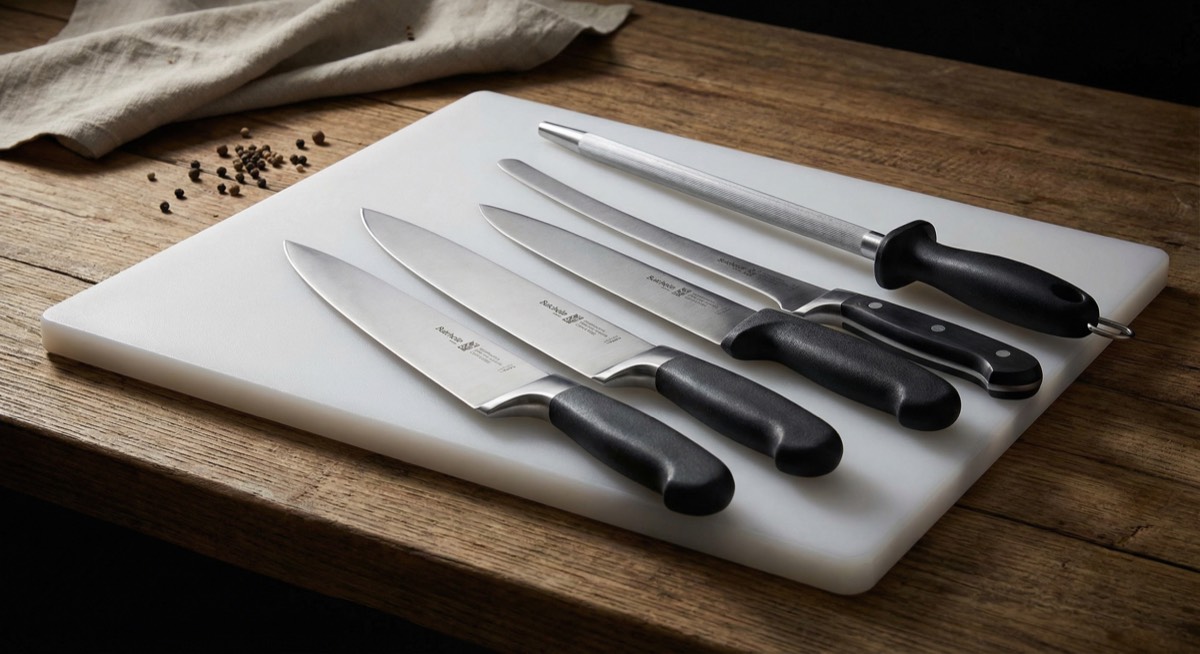
Knives are the foundation. You can butcher an entire animal with just three knives if they are the right ones and kept razor sharp.
1. Boning Knife (6-inch, Semi-Flexible)
This is your most important knife. A boning knife follows the contours of bones, separates joints, and removes silverskin. The semi-flexible blade gives you control around curves without being so floppy that it becomes dangerous.
- Budget ($25-40): Victorinox Fibrox Pro 6-inch Boning Knife. The industry standard for commercial butchers. Comfortable, sharp out of the box, easy to resharpen.
- Mid-range ($60-100): Dexter-Russell Sani-Safe or Mercer Culinary Genesis. Slightly better edge retention.
- Premium ($100-200): Wusthof Pro or Messermeister Meridian Elite. Superior steel, longer edge life, but honestly overkill for home use.
Elena's recommendation: The Victorinox. Seriously. I have used knives costing 10x more, and for boning work, the Victorinox performs at 95% of the level for 20% of the price. Buy two — one for rough work, one kept pristine for detail work.
2. Breaking Knife (8-10 inch, Curved)
Also called a cimeter or scimitar knife. The curved blade is designed for long, sweeping cuts through large muscles. This is what you use to separate primals, portion steaks, and trim large pieces of meat.
- Budget ($30-50): Victorinox 10-inch Cimeter.
- Mid-range ($50-80): Dexter-Russell Sani-Safe 10-inch Cimeter.
A 10-inch chef's knife can substitute in a pinch, but the curved belly of a true cimeter makes long cuts significantly easier and more controlled.
3. Skinning Knife (5-6 inch, Stiff, Wide Blade)
If you are processing whole animals (deer, hog, lamb), a skinning knife is essential. The wide, stiff blade separates hide from meat without puncturing the skin or nicking the flesh underneath.
- Budget ($20-35): Victorinox 6-inch Skinning Knife or Dexter-Russell Sani-Safe Skinner.
If you are only breaking down already-skinned primals (beef sub-primals from a butcher or warehouse club), you can skip this one.
Sharpening Equipment (Non-Negotiable)
A dull knife is the most dangerous tool in your kitchen. It slips, requires more force, and produces ragged cuts. Keeping your knives sharp is not optional — it is the single most important skill in butchery.
Honing Steel
A honing steel does not sharpen — it realigns the microscopic edge of your blade between cuts. Use it every 10-15 minutes during a butchering session.
- Recommended: Any 12-inch fine-cut steel. Victorinox, Mercer, or Dexter all make good ones ($15-30).
- Ceramic rods (like the Idahone 12-inch) do light sharpening AND honing. A great dual-purpose option ($30-40).
Sharpening System
For actual sharpening (restoring a dull edge), you have several options:
- Whetstones (best results): A 1000/6000 grit combination stone ($25-60) gives you a working edge and a polished finish. Learning curve: moderate. Results: excellent.
- Pull-through sharpeners (easiest): Chef'sChoice or Work Sharp units ($30-80). Minimal learning curve, consistent angles, good enough for butchering.
- Belt sharpeners (fastest): Work Sharp Ken Onion Edition ($80-120). Fast, adjustable angles, excellent for maintaining multiple knives.
My rule: Hone before every session. Sharpen after every session. A sharp knife makes butchering faster, safer, and produces cleaner cuts that age and cook better.
Cutting Surface
Your work surface matters more than you think. The wrong surface dulls knives, harbors bacteria, and makes cleanup a nightmare.
HDPE (High-Density Polyethylene) Cutting Board
This is what commercial butcher shops use. HDPE is:
- NSF-certified food safe
- Knife-friendly (does not dull blades as fast as glass or bamboo)
- Non-porous (does not absorb blood or bacteria)
- Dishwasher safe
- Available in large sizes suitable for breaking down primals
Recommended size: At minimum 18 x 24 inches. For whole-animal work, 24 x 36 inches is ideal.
Budget ($20-40): Commercial white HDPE board from a restaurant supply store. Do not buy the thin, flexible ones — get at least 0.5 inches thick.
Butcher Block (Wood)
End-grain butcher blocks are beautiful, gentle on knives, and naturally antimicrobial (hardwoods like maple contain tannins that inhibit bacteria). However:
- Expensive ($100-500+ for quality blocks)
- Require oiling and maintenance
- Cannot go in the dishwasher
- Can warp if not cared for properly
A butcher block is a luxury, not a necessity. Start with HDPE and upgrade later if you want.
Bone Saw
If you are cutting through bone (splitting a whole loin into chops, portioning ribs, breaking down a whole carcass), you need a saw.
Hand Bone Saw
A 22-25 inch butcher's hand saw handles most home tasks:
- Budget ($30-50): Dexter-Russell or Victorinox butcher saws with replaceable blades.
- Key feature: Get one with replaceable blades. Saw blades dull after a few uses on bone, and replacing a $5 blade is much cheaper than buying a new saw.
Reciprocating Saw (Sawzall)
For high-volume or whole-carcass work, many home processors use a standard reciprocating saw (Sawzall) with a dedicated meat-cutting blade:
- Fast and powerful
- Clean cuts through any bone
- Dedicated meat blades available from Bosch and Diablo ($10-15 per blade)
- Clean and sanitize the saw thoroughly before and after use
Important: If using a power tool, dedicate it to meat processing only. Do not use the same reciprocating saw for construction and butchering.
Band Saw (Upgrade)
If you process multiple animals per year, a tabletop meat band saw ($200-600) is the gold standard. Precise, fast, and consistent. Weston, LEM, and Guide Gear all make home-grade models.
Meat Grinder
A grinder turns trim and less desirable cuts into ground meat, sausage, and burger. If you are processing whole animals, a grinder is essential — you will have pounds of trim that would otherwise go to waste.
Manual Grinder
- Clamps to your table
- No electricity needed
- Slow but effective for small batches (under 5 lbs)
- $30-60 from LEM or Weston
Electric Grinder
- #8 size ($80-150): Good for occasional use, 3-5 lbs per batch. STX International, LEM.
- #12 size ($150-300): Handles 10+ lbs efficiently. Ideal for deer processing or whole-hog work. LEM, Weston.
- #22 size ($300-600): Semi-commercial. If you process more than 3-4 animals per year, this size pays for itself in time savings.
Pro tip: Keep your grinder plates, blades, and meat partially frozen during grinding. Cold meat grinds cleanly. Warm meat smears and produces a mushy texture.
Vacuum Sealer
After you have done all the work of breaking down an animal, proper packaging is what preserves your investment. A vacuum sealer removes air, prevents freezer burn, and extends freezer life from months to over a year.
- Entry level ($50-80): FoodSaver V4400 or similar. Uses pre-made bags. Good for occasional use.
- Mid-range ($150-250): FoodSaver GameSaver or Weston Pro. Better suction, handles liquids and wet meats better.
- Chamber sealer ($300-800): VacMaster or Avid Armor. Uses cheaper flat bags instead of textured bags. If you process more than 2 animals per year, a chamber sealer saves money on bags within the first year.
Bag tip: Buy bags in bulk rolls and cut to size. Pre-made bags cost 3-5x more per unit than roll stock.
Hanging and Aging Equipment
If you plan to dry-age beef at home (and you should — the flavor difference is remarkable), you need:
- Dedicated refrigerator: A used full-size fridge from Craigslist ($50-150) dedicated to aging. Set to 34-38 degrees F.
- Small fan: A USB computer fan mounted inside for air circulation. Prevents moisture pockets and promotes even drying.
- Wire racks or meat hooks: Elevate the meat for airflow on all sides.
- Hygrometer: Monitor humidity (target 80-85% for dry aging). A simple digital hygrometer costs $10-15.
Dry aging requires a whole sub-primal (bone-in ribeye or strip loin, minimum 10 lbs) and 21-45 days of patience. The exterior forms a bark that gets trimmed away, revealing incredibly concentrated, nutty, beefy flavor underneath.
Safety Equipment
Butchering involves sharp tools, heavy lifting, and raw meat. Do not skip safety:
- Cut-resistant glove ($15-25): Wear on your non-knife hand. Mesh or Kevlar options available. This is the single cheapest insurance against a trip to the ER.
- Rubber apron ($15-30): Keeps you clean and dry during messy work.
- Non-slip footwear: Butchering generates blood and fat on the floor. Wear shoes with grip.
- Disposable nitrile gloves: For handling raw meat. Buy in bulk ($15/box of 100).
Cleanup and Sanitation
- Bleach solution or quaternary sanitizer: Spray all surfaces after cleaning with soap. 1 tablespoon bleach per gallon of water is the standard sanitizing ratio.
- Dedicated cutting board cleaner: Or just hot soapy water followed by sanitizer.
- Multiple towels: Microfiber or disposable. You will go through many.
- Trash bags: Heavy-duty contractor bags for bones, trim, and waste. Double-bag to prevent leaks.
The Starter Kit: Everything You Need for Under $200
Here is the minimum viable setup to start butchering at home:
| Item | Recommended | Cost |
|---|---|---|
| Boning knife | Victorinox 6-inch | $30 |
| Breaking knife | Victorinox 10-inch cimeter | $40 |
| Honing steel | Victorinox 12-inch | $15 |
| Sharpener | 1000/6000 combo whetstone | $30 |
| Cutting board | 18x24 HDPE commercial | $25 |
| Hand bone saw | Dexter-Russell with spare blades | $35 |
| Cut-resistant glove | Kevlar or mesh | $15 |
| Nitrile gloves | Box of 100 | $12 |
| Total | $202 |
This kit handles breaking down primals into retail cuts, portioning steaks, deboning roasts, and basic whole-animal processing. Add a grinder ($80-150) and vacuum sealer ($50-80) when you are ready to process trim and package for the freezer.
What to Buy First vs. Later
Buy Now (Essential)
- Boning knife + breaking knife
- Honing steel + sharpening system
- Large HDPE cutting board
- Cut-resistant glove
Buy After Your First Session
- Hand bone saw (if cutting through bone)
- Vacuum sealer + bag rolls
- Meat grinder (if making ground meat or sausage)
Buy When You Are Serious
- Band saw for precision bone cuts
- Dedicated aging fridge
- Chamber vacuum sealer
- Sausage stuffer
Start simple. The knives and cutting surface are what matter most. Everything else is an upgrade that makes the work faster or more efficient, but the fundamentals come down to a sharp knife and a clean surface.
Frequently Asked Questions
What knives do I need for home butchering?
At minimum, you need three knives: a 6-inch semi-flexible boning knife for working around bones and joints, an 8-10 inch breaking knife (cimeter) for portioning large cuts and steaks, and a skinning knife if processing whole animals with hide. The Victorinox Fibrox Pro line is the industry standard and offers excellent performance at $25-40 per knife.
How much does it cost to set up a home butchering station?
A complete starter kit costs approximately $200: two quality knives ($70), honing steel and sharpener ($45), large HDPE cutting board ($25), hand bone saw ($35), and safety equipment ($27). Add a meat grinder ($80-150) and vacuum sealer ($50-80) for full processing capability.
What cutting board is best for butchering meat?
HDPE (High-Density Polyethylene) cutting boards are the industry standard for butchering. They are NSF-certified food safe, non-porous (no bacterial absorption), knife-friendly, dishwasher safe, and available in large sizes. Get at least 18x24 inches and 0.5 inches thick. Commercial restaurant supply stores sell them for $20-40.
Do I need a bone saw for home butchering?
If you are cutting through bone (portioning chops, splitting ribs, breaking down carcasses), yes. A hand butcher saw ($30-50) with replaceable blades handles most home tasks. For higher volume, a reciprocating saw with meat-cutting blades or a tabletop meat band saw ($200-600) is more efficient.
What is the best meat grinder for home use?
For occasional use (under 5 lbs at a time), a #8 electric grinder from STX or LEM ($80-150) is sufficient. For deer processing or whole-hog work (10+ lbs), step up to a #12 ($150-300). Keep all parts and meat partially frozen during grinding for the cleanest results.
How do I keep butchering knives sharp?
Use a honing steel every 10-15 minutes during work to realign the edge. After each session, sharpen with a whetstone (1000/6000 grit combo), pull-through sharpener, or belt sharpener. A sharp knife is safer, faster, and produces cleaner cuts that age and cook better.
More Expert Guides
How to Trim a Brisket: The Complete Butcher's Guide
Proper brisket trimming is the difference between a backyard experiment and competition-quality results. Here is the professional technique for shaping a whole packer brisket before it ever touches the smoker.
14 min readHow to Butcher a Whole Chicken: Step-by-Step Guide
Breaking down a whole chicken yourself saves 40-50% compared to buying individual parts. Here is the professional technique for turning one bird into perfectly portioned pieces.
14 min readHome Butchering Safety Guide: Essential Protocols for Safe Meat Processing
Learn professional butchering safety protocols from a master butcher with 25+ years of experience. Essential guidance for anyone processing meat at home.