How to Break Down a Beef Round: Complete Butcher's Guide
How to Break Down a Beef Round: Complete Butcher's Guide
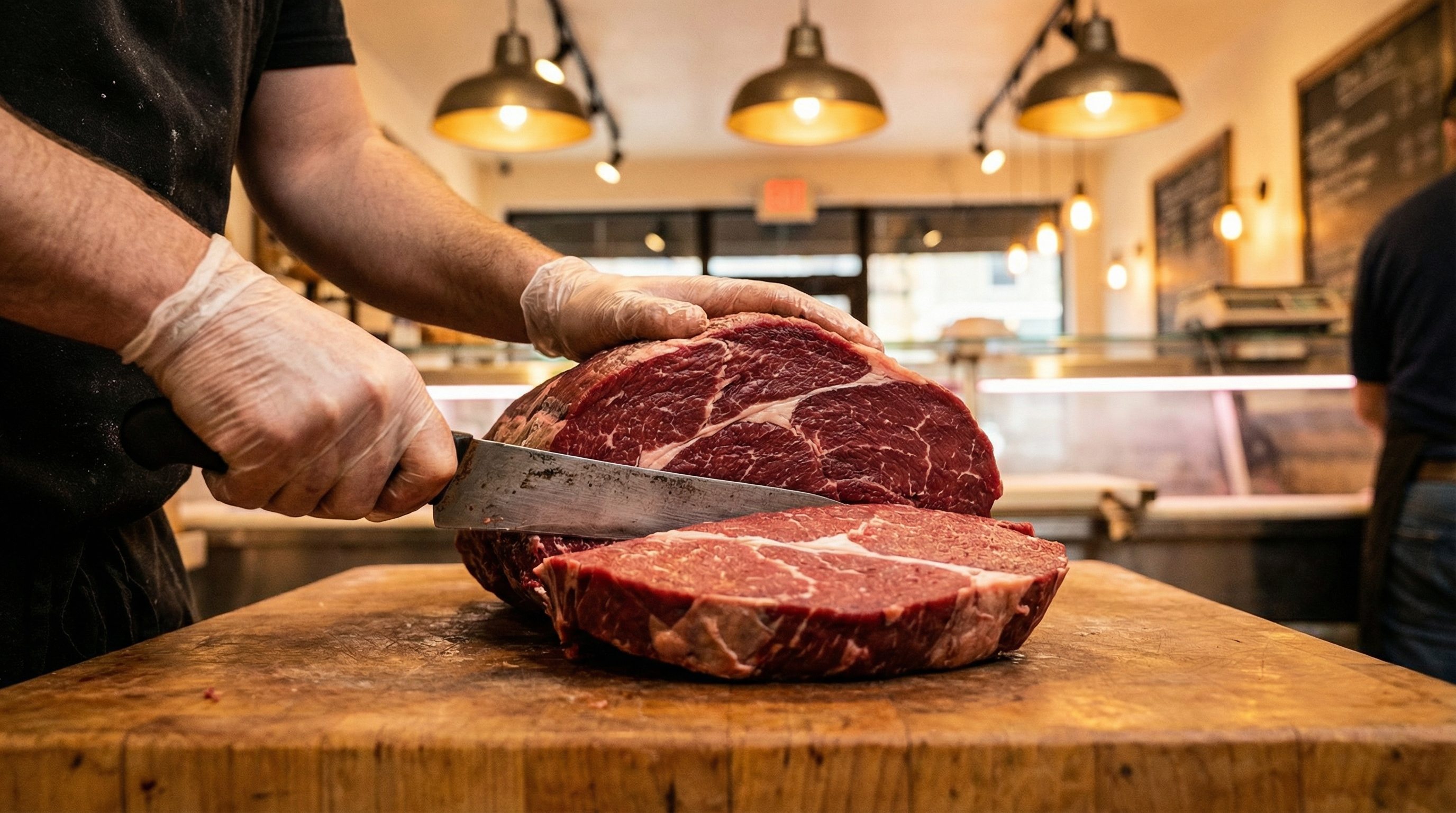
The beef round is the rear leg of the animal — the largest and leanest of the eight primal cuts. A whole round can weigh 50 to 70 pounds and contains some of the most versatile (and most misunderstood) muscles on the carcass. When broken down correctly, you get affordable roasts, lean steaks, stir-fry meat, jerky stock, and pounds of excellent ground beef.
The round intimidates home butchers because of its sheer size and complex muscle structure. But the approach is straightforward: follow the seams. Every subprimal in the round is separated by natural fat seams and connective tissue that practically guide your knife.
Understanding the Beef Round
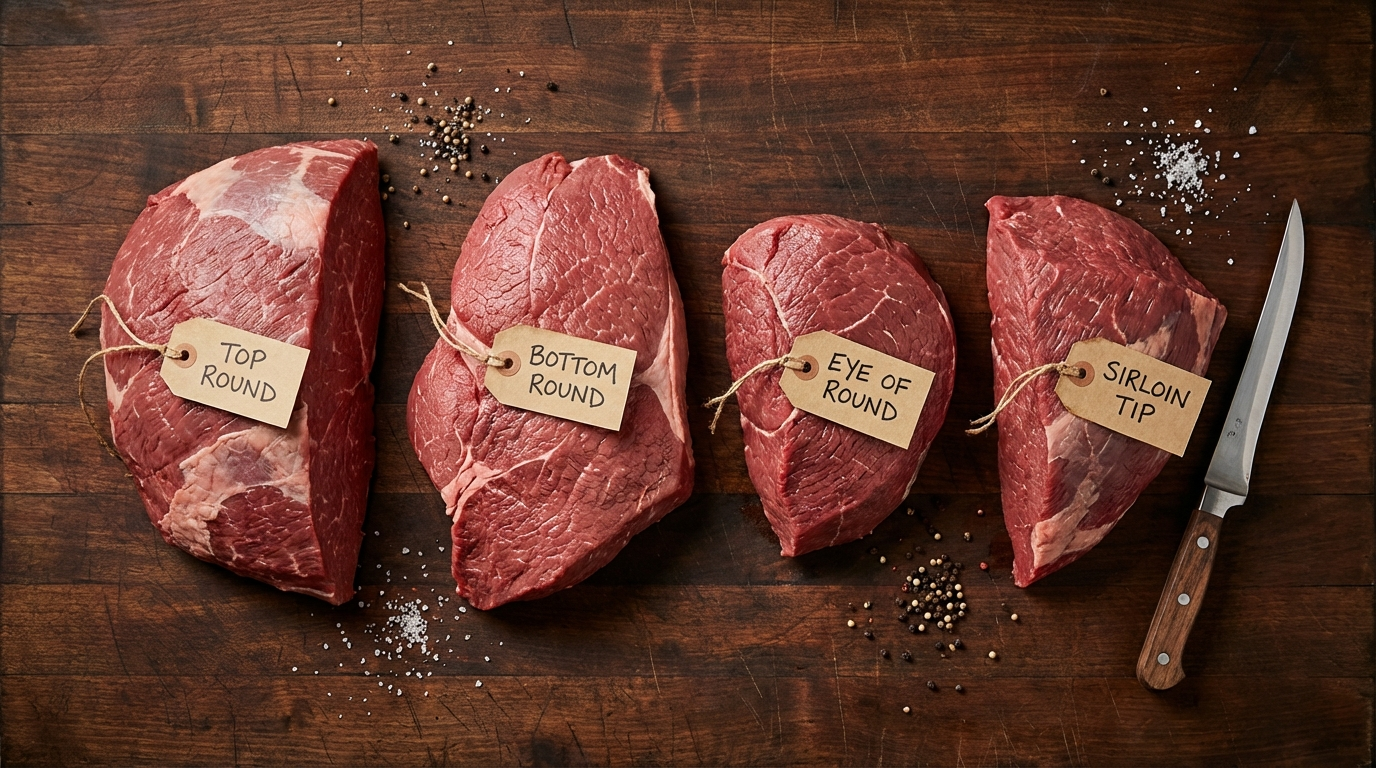
The round comes from the hindquarter, specifically the rear leg from hip to hock. It is the most exercised part of the animal, which means the meat is lean, flavorful, and benefits from careful cooking. The major subprimals inside the round are:
- Top round (inside round): The largest single muscle. Lean, moderately tender. Best for roast beef, London broil, and deli-style slicing.
- Bottom round (outside round): Slightly tougher than the top round. Contains the bottom round roast (also called outside flat) and the heel. Excellent braised or slow-roasted.
- Eye of round: A small, cylindrical muscle tucked between the top and bottom round. Very lean and uniform — the classic deli roast beef cut.
- Sirloin tip (knuckle): Located at the front of the round near the sirloin. More tender than other round cuts. Good for roasts, kabobs, and stir-fry.
- Shank: The lower leg portion. Tough, collagen-rich, and perfect for osso buco and stocks.
Tools You Need
Breaking down a round does not require specialized equipment. You need:
- 6-inch boning knife (semi-flexible): Your primary tool for seam work and detail cuts.
- 10-inch breaking knife (cimeter): For long, sweeping cuts through large muscles and separating the major subprimals.
- Bone saw or reciprocating saw: Only needed if you are removing the shank at the joint or splitting the aitch bone.
- Large cutting board: Minimum 24 x 18 inches. The round is big — give yourself room.
- Sharpening steel: You will use it multiple times during this breakdown.
- Cut-resistant glove: Wear it on your non-knife hand. The round has slippery fat seams where your grip hand can easily slide into the blade.
Keep the meat cold. Work straight from the refrigerator. A cold round is firmer and much easier to cut cleanly than one that has warmed to room temperature.
Step 1: Remove the Shank
Start by placing the round on your cutting surface with the shank (lower leg) facing you. The shank connects to the round at the knee joint.
Feel for the joint with your fingers — you will find a natural gap between the bones. Cut through the tendons and ligaments surrounding the joint with your boning knife, then use your bone saw to cut through the joint itself. If the shank has already been removed by your supplier, skip to Step 2.
The shank is a high-collagen cut. Set it aside for braising, osso buco, or stock. Do not grind it — the connective tissue makes it stringy in ground applications but extraordinary when braised low and slow.
Step 2: Remove the Aitch Bone
The aitch bone (also called the pelvic bone or H-bone) is the large, flat bone at the top of the round where it connects to the hip. Removing it first makes every subsequent cut easier.
Place the round with the bone side up. You can see the aitch bone protruding from one end. Starting at the exposed edge of the bone, use your boning knife to scrape along the bone surface, keeping the blade against bone at all times. Work slowly — the aitch bone has curves and pockets where meat hides.
Follow the bone around its entire perimeter. When you reach the ball-and-socket joint where the femur meets the pelvis, cut through the ligaments to free it. Pull the aitch bone away and set it aside for stock.
Tip: Some butchers prefer to leave the aitch bone in and work around it. For home butchering, removing it first is cleaner and wastes less meat.
Step 3: Separate the Sirloin Tip (Knuckle)
With the aitch bone removed, turn the round so you are looking at the front face — the end that was closest to the sirloin. The sirloin tip sits on the front and slightly to the inside of the round. You can identify it by the thick fat seam that separates it from the top round.
Find that fat seam with your fingers. It runs from the top of the round diagonally toward the kneecap area. Insert your boning knife into the seam and follow it, letting the natural separation guide your blade. The sirloin tip will peel away from the top round as you work along the seam.
Continue cutting along the femur bone where the knuckle attaches. The sirloin tip has a thin connection to the bone — cut through it to free the subprimal completely.
The sirloin tip typically weighs 8 to 12 pounds. It is the most tender subprimal in the round and can be cut into:
- Sirloin tip roast: Leave whole, tie with butcher twine, roast to medium-rare.
- Sirloin tip steaks: Cut 3/4-inch thick. Marinate before grilling for best results.
- Kabob meat: Cut into 1.5-inch cubes. The knuckle's moderate tenderness makes it ideal for skewers.
- Stir-fry strips: Slice thin against the grain while partially frozen.
Step 4: Separate the Top Round from the Bottom Round
This is the main event. The top round and bottom round are the two largest muscles in the round, and they sit against each other with a fat seam running between them.
With the sirloin tip removed, you can now clearly see the interior of the round. The top round (inside round) is the larger, rounder muscle on the inner side of the leg. The bottom round (outside round) is the flatter muscle on the outer side.
Find the natural fat seam between them. It runs the length of the round from front to back. Start at one end with your boning knife and work along the seam, pulling the top round away from the bottom round as you go. The seam is usually generous — thick enough that your knife barely needs to cut meat. Let the fat guide you.
As you separate them, you will encounter the eye of round — a small, elongated cylindrical muscle sitting in the seam between the top and bottom round. Carefully free it from both sides. It will come out as a neat torpedo-shaped piece, typically 2 to 4 pounds.
Continue separating the top round from the bottom round until they are completely detached from each other and from the femur bone.
Step 5: Clean the Femur Bone
With all four subprimals removed, you should be left with the femur bone and some attached meat scraps. Scrape the remaining meat off the bone with your boning knife. This trim goes into your grind pile.
The femur bone makes outstanding beef stock. Roast it at 400 degrees F until deeply browned before simmering for the best flavor extraction.
Step 6: Trim and Portion Each Subprimal
Now that you have your four subprimals separated, each one needs trimming and portioning.
Top Round
The top round typically weighs 15 to 20 pounds. Remove the heavy cap of fat on the exterior, leaving about 1/8 inch for flavor during cooking. Remove any large patches of silverskin using the tip of your boning knife — slide under the silverskin, angle the blade slightly upward, and pull the silverskin taut while cutting.
Portioning options:
- Whole roast: The top round makes an excellent roast beef. Tie with butcher twine at 1-inch intervals for even cooking. Roast low and slow (250°F) to medium-rare, then slice thin against the grain.
- London broil steaks: Cut 1 to 1.5-inch thick slabs across the grain. Marinate for 4 to 24 hours before grilling hot and fast. Slice thin to serve.
- Deli roast beef: Roast the whole top round to 130°F internal, chill completely, then slice paper-thin on a deli slicer or with a very sharp carving knife.
- Jerky: Partially freeze, then slice 1/4-inch thick with the grain (for chewy jerky) or against the grain (for tender jerky).
Bottom Round
The bottom round weighs 12 to 16 pounds and contains two distinct sections: the flat (the main muscle) and the heel (a tougher, more sinewy piece at the narrow end).
Separate the heel from the flat by following the visible seam between them. The heel is best used for ground beef, stew meat, or long braises.
Portioning the flat:
- Bottom round roast (rump roast): Classic Sunday pot roast. Braise in liquid at 300°F for 3 to 4 hours until fork-tender.
- Stew meat: Cut into 1.5-inch cubes for beef stew, chili, or curry. The bottom round's firm texture holds up beautifully in long-cooked stews.
- Ground beef: Mix bottom round trim with fattier trim from other cuts (aim for 80/20 or 85/15 lean-to-fat ratio).
Eye of Round
The eye of round is a small, uniform cylinder — usually 2 to 4 pounds. Trim the silverskin and exterior fat. Its uniform shape makes it ideal for:
- Deli roast beef: The classic choice. Roast to 130°F, chill, slice thin. The uniform shape means every slice is the same size.
- Beef jerky: The eye of round's lean, uniform structure makes it the single best cut for jerky. Slice consistently thin while partially frozen.
- Rouladen: Slice into thin sheets, pound flat, fill and roll for the German classic.
Warning: Do not cook eye of round like a steak. It is very lean and will become tough and dry if cooked beyond medium-rare. Low temperature roasting or braising are your only good options.
Sirloin Tip
The sirloin tip benefits from having its external fat cap trimmed to 1/8 inch and any large silverskin patches removed. It is the most versatile subprimal from the round — tender enough for dry-heat methods when sliced thin, sturdy enough for stews and braises.
Yield Expectations
From a 60-pound whole beef round, expect approximately:
- Top round: 15–20 lbs (25–33%)
- Bottom round: 12–16 lbs (20–27%)
- Sirloin tip: 8–12 lbs (13–20%)
- Eye of round: 2–4 lbs (3–7%)
- Shank: 4–6 lbs (7–10%)
- Bone and trim: 6–10 lbs (10–17%)
Your usable meat yield from a whole round is typically 80 to 85 percent. The rest is bone, heavy fat, and connective tissue — all of which have value for stock, rendering, or pet food.
Common Mistakes to Avoid
Even experienced home butchers make these errors with the round:
- Cutting through seams instead of following them. The round practically disassembles itself if you follow the natural fat seams. Forcing cuts through muscle wastes meat and creates uneven pieces.
- Leaving too much silverskin. Silverskin does not break down during cooking. It contracts and makes the meat curl and toughen. Take the time to remove it properly from each subprimal.
- Treating round cuts like premium steaks. Round cuts are lean working muscles. They need either fast, hot cooking to rare or medium-rare and thin slicing, or low and slow braising. Medium-well round steak is shoe leather.
- Grinding everything. A whole round yields excellent roasts, steaks, and specialty cuts. Grinding the entire thing wastes its potential. Grind the trim and the heel — portion the rest.
- Working with warm meat. Cold meat is firm and cuts cleanly. If the round warms up during your work, put it back in the fridge for 30 minutes before continuing.
Storage and Shelf Life
After breaking down and portioning your round:
- Refrigerator (fresh): Use within 3 to 5 days. Keep at 34 to 38°F.
- Vacuum sealed and frozen: 10 to 12 months for roasts and steaks, 3 to 4 months for ground beef.
- Paper-wrapped and frozen: 4 to 6 months before freezer burn becomes noticeable.
Label everything with the cut name, weight, and date. In three months, you will not remember which unlabeled white package is the eye of round and which is the bottom round heel.
Frequently Asked Questions
Frequently Asked Questions
How long does it take to break down a whole beef round?
For a first-timer, expect 45 minutes to an hour. With practice, you can break down a whole round into subprimals in 20 to 30 minutes. The trimming and portioning afterward takes additional time depending on how many retail cuts you are making.
Can I break down a beef round without a bone saw?
Yes, if the shank has already been removed. You can remove the aitch bone entirely with a boning knife by scraping along the bone surface. The femur can also be removed with knife work alone — cut around it and through the joint connections. A bone saw just makes it faster.
What is the best cut from the beef round?
The sirloin tip (knuckle) is the most tender and versatile subprimal from the round. The top round is the best for roast beef and London broil. The eye of round is the best for jerky and deli meat due to its uniform shape and lean composition.
Where can I buy a whole beef round?
Restaurant supply stores (like Restaurant Depot or Jetro), wholesale clubs (Costco and Sam's Club sometimes carry whole subprimals), local butcher shops, and directly from farms or meat processors. Expect to pay significantly less per pound than retail cuts — typically 40 to 60 percent less.
Is the beef round good for grilling?
Some round cuts grill well with the right approach. Sirloin tip steaks and top round London broil can be grilled hot and fast, but they must be marinated first and sliced thin against the grain. Bottom round and eye of round are too lean and tough for direct grilling — stick to roasting or braising for those.
More Expert Guides
How to Trim a Brisket: The Complete Butcher's Guide
Proper brisket trimming is the difference between a backyard experiment and competition-quality results. Here is the professional technique for shaping a whole packer brisket before it ever touches the smoker.
14 min readHow to Butcher a Whole Chicken: Step-by-Step Guide
Breaking down a whole chicken yourself saves 40-50% compared to buying individual parts. Here is the professional technique for turning one bird into perfectly portioned pieces.
14 min readHome Butchering Safety Guide: Essential Protocols for Safe Meat Processing
Learn professional butchering safety protocols from a master butcher with 25+ years of experience. Essential guidance for anyone processing meat at home.