How to Trim a Brisket: The Complete Butcher's Guide
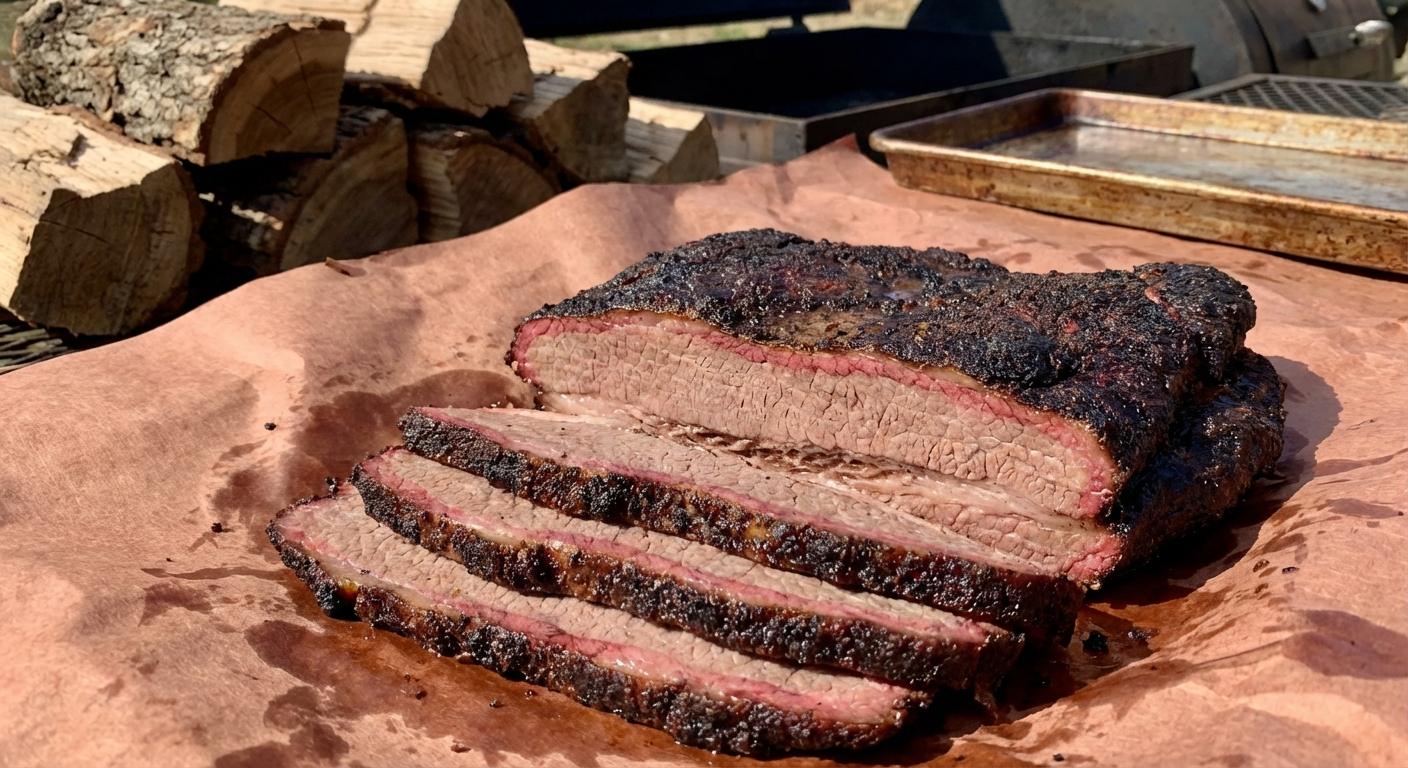
A whole packer brisket arrives from the butcher looking like a rough slab of meat with uneven fat deposits, hard chunks of tallow, and ragged edges. What you do in the next 20 minutes of trimming determines whether that brisket cooks evenly, renders properly, and develops a consistent bark — or turns into a lopsided mess with burnt thin spots and undercooked thick ones.
Trimming is not about removing fat. It is about shaping the brisket into an aerodynamic form that cooks uniformly, allows smoke penetration where it matters, and retains enough fat to keep the meat moist through a 12-to-16-hour cook. Get this step wrong and no amount of rub, wood selection, or temperature management will save you.
Understanding Brisket Anatomy
Before you make a single cut, you need to understand what you are working with. A whole packer brisket consists of two distinct muscles separated by a layer of fat called the deckle:
- The Flat (pectoralis profundus): The larger, leaner, thinner muscle on the bottom. This is what most people picture when they think of sliced brisket. It tapers from thick at the point end to thin at the opposite end.
- The Point (pectoralis superficialis): The smaller, fattier, thicker muscle that sits on top of the flat. This is where burnt ends come from. It has significantly more intramuscular marbling than the flat.
- The Deckle Fat: A thick seam of hard fat between the point and flat. Some of this renders during cooking, but the densest portions will not break down even after 16 hours.
- The Fat Cap: A layer of external fat covering one side of the brisket. Thickness varies from a quarter inch to over an inch across the surface.
When you pick up the brisket, identify the fat cap side and the meat side. The fat cap side feels smooth and waxy. The meat side has exposed muscle with some membrane and scattered fat deposits. Orientation matters — every trim decision depends on knowing which side is up.
Tools You Need
- Sharp boning knife or trimming knife (5-7 inches): A shorter, flexible blade gives you the control you need for precise fat removal. A long chef's knife is too unwieldy for this work.
- Large cutting board: At least 20x15 inches. A full packer brisket is big — typically 12 to 20 pounds and 18 to 24 inches long.
- Paper towels: For drying the surface and improving your grip.
- A bowl or tray for trimmings: Save the fat for grinding into burger blends or rendering into tallow.
Cold brisket trims better than warm brisket. Work with the meat straight from the refrigerator. Cold fat is firm and cuts cleanly. Warm fat smears, slides, and makes precise cuts nearly impossible.
Step 1: Trim the Meat Side First
Flip the brisket so the meat side faces up. This is the side without the thick fat cap.
Remove Silver Skin and Membrane
Look for any silver skin — thin, translucent membrane that looks shiny and slightly iridescent. Silver skin does not render, does not absorb smoke, and creates a chewy barrier between the bark and the meat. Slide your knife under the membrane and peel it away, using short strokes to separate it from the muscle.
You will also find loose pieces of membrane scattered across the surface. Remove all of them. Every square inch of exposed meat is a square inch that can develop bark and absorb smoke flavor.
Remove Hard Fat Deposits
On the meat side, you will find patches of hard, white fat. These deposits feel firm and waxy to the touch — distinctly different from the softer, more pliable fat within the muscle. Hard fat does not render during cooking. It just sits there, creating pockets of unrendered tallow in the finished product.
Trim these deposits flush with the surrounding meat. You do not need to dig into the muscle — just remove the surface fat that rises above the meat plane.
Clean Up the Edges
Trim any thin, ragged flaps of meat hanging off the edges. These thin pieces will cook much faster than the main body of the brisket and will burn or dry out long before the center reaches temperature. A clean, uniform edge means even cooking from edge to center.
Step 2: Trim the Fat Cap
Flip the brisket over so the fat cap faces up. This is where the real shaping happens.
Establish Your Target Thickness
The goal is a uniform fat cap approximately one-quarter inch thick across the entire surface. Some pitmasters prefer slightly thicker (up to a half inch) and some go thinner. One-quarter inch is the sweet spot: thick enough to protect the meat and render slowly, thin enough to allow bark formation and smoke penetration.
Start by identifying the thickest areas. On most briskets, the fat cap is thickest near the point end and along the center ridge. It thins out toward the flat end and the edges.
Remove Excess Fat in Layers
Do not try to take the fat cap down to one-quarter inch in a single pass. Work in thin layers, making long, sweeping strokes with your knife held nearly parallel to the surface. Each pass should remove a quarter to half inch of fat.
Key technique: keep your knife blade almost flat against the brisket. The angle between blade and surface should be 10 to 15 degrees — barely more than parallel. Steeper angles gouge the fat unevenly and risk cutting into the meat underneath.
Work from the thick areas toward the thin areas. This prevents you from accidentally removing too much fat from spots that are already close to the target thickness.
The Hard Fat Nugget
Near the point end of the fat cap, you will find a dense nugget of hard fat — sometimes called the deckle knob. This chunk can be an inch or more thick and feels rock-hard compared to the surrounding fat. It will not render no matter how long you cook the brisket.
Remove it entirely. Dig in with your knife and cut it out, then smooth the surrounding fat to blend with the rest of the cap. Leaving this nugget means a big blob of unrendered fat in your finished brisket.
Step 3: Shape the Brisket for Even Cooking
This is the step that separates professional trims from amateur ones. Shaping is about creating a brisket that cooks uniformly by eliminating dramatic thickness changes.
Square Up the Flat End
The thin end of the flat tapers to a wedge — sometimes as thin as half an inch. This thin tail will overcook and dry out hours before the thick end of the brisket is done. Square it off by cutting straight across where the flat becomes less than one inch thick.
Yes, you are removing usable meat. Save it. Grind it into burgers, dice it for chili, or braise it separately. Sacrificing a few ounces of meat from the thin end protects the rest of the brisket from uneven cooking.
Round the Corners
Sharp corners and right angles on a brisket are your enemy. Corners cook faster than flat surfaces because heat hits them from multiple directions. They dry out, burn, and create bitter spots on an otherwise well-cooked brisket.
Round every corner into a smooth curve. The brisket should have no sharp edges — think of it as creating an oval or teardrop shape when viewed from above. Aerodynamic is the word pitmasters use, and it is surprisingly accurate. Smooth airflow around the brisket means even heat distribution.
Taper the Transitions
Where the point sits on top of the flat, you have a dramatic thickness change. The combined point-and-flat section might be four to five inches thick while the flat alone is only two inches. This transition zone needs smoothing.
Trim the fat and excess meat along the point-flat junction to create a gradual slope rather than a sudden step. You cannot eliminate the thickness difference entirely, but you can reduce the abruptness. A gradual taper cooks more evenly than a cliff.
Step 4: Clean the Deckle Seam
The deckle seam runs between the point and flat muscles. On the meat side of the brisket, you can see where these two muscles meet — there is usually a visible line of fat and connective tissue marking the boundary.
Some of the hard deckle fat extends to the surface at this seam. Trim it back so it does not protrude above the surrounding meat surface. You are not separating the muscles — just cleaning up where they meet so the exterior surface is smooth and consistent.
At the far end of the point, the deckle fat often creates a thick wedge that lifts the point away from the flat. Trim this wedge so the point lies flat against the cutting board without a gap underneath. Gaps create inconsistent cooking and prevent bark formation on the hidden surfaces.
Step 5: Final Inspection
Before calling the trim complete, run through this checklist:
- Fat cap thickness: Uniform one-quarter inch across the entire surface. No thick spots, no bare spots where meat is exposed through the cap.
- Meat side: All silver skin and membrane removed. No hard fat deposits remaining. Clean, exposed muscle ready for rub.
- Edges: Smooth and rounded. No thin flaps, sharp corners, or ragged pieces.
- Shape: Teardrop or oval when viewed from above. Gradual taper from thick to thin. No sudden thickness changes.
- Overall feel: The brisket should feel uniformly firm with a consistent layer of fat protection. When you press on different areas, the resistance should feel similar.
A properly trimmed brisket looks intentional. It has clean lines, smooth curves, and a shape that says someone who understands the cooking process prepared this meat.
What to Do with the Trimmings
Never throw away brisket trimmings. You just removed some of the most flavorful beef fat on the animal. Here is what to do with it:
- Burger blend: Grind the fat trimmings with lean beef (like eye of round or sirloin) for an incredible burger. A 70/30 or 75/25 lean-to-fat ratio using brisket fat produces burgers with deep beefy flavor.
- Rendered tallow: Cut the fat into small pieces, cook low and slow in a pot until the fat melts and the solids crisp up. Strain and store. Brisket tallow is liquid gold for frying, searing, and making Yorkshire pudding.
- Sausage: Brisket fat can replace pork back fat in sausage recipes for an all-beef sausage with outstanding flavor.
- Stock enhancement: Add trimmings to your next beef stock for extra body and richness.
The meat trimmings from squaring up the flat can be seasoned with the same rub as the brisket and smoked alongside it — they will be done in a fraction of the time and make excellent snacking material while you wait for the main event.
Common Trimming Mistakes
Removing Too Much Fat
The most common beginner mistake. You need that quarter-inch fat cap. It bastes the meat during cooking, protects it from direct heat, and contributes to moisture retention. If you can see meat through the fat cap, you have gone too far.
Not Removing Enough Hard Fat
Hard, waxy fat will not render. If it feels like a candle when cold, it will act like a candle when cooked — sitting there in solid chunks. Be aggressive with hard fat removal, especially the deckle knob and any dense pockets on the meat side.
Ignoring the Shape
A brisket with sharp corners, thin tails, and dramatic thickness changes will cook unevenly no matter what else you do. Spend the extra five minutes on shaping. Your future self — standing in front of the smoker 14 hours from now — will thank you.
Using a Dull Knife
A dull knife turns trimming from a 20-minute task into a 45-minute wrestling match. The blade should glide through cold fat with minimal pressure. If you are pushing hard or sawing, stop and sharpen your knife. A few minutes on a honing steel or whetstone saves time and produces cleaner results.
Trimming Warm Brisket
Room-temperature fat is soft, slippery, and difficult to cut cleanly. Always trim straight from the refrigerator. If the brisket warms up during trimming, put it back in the fridge for 15 minutes and then continue.
How Much Should You Trim Off?
Expect to remove 1.5 to 3 pounds of fat and trimmings from a typical 14-to-16-pound whole packer brisket. That represents roughly 10 to 20 percent of the starting weight. If you are removing significantly more than that, you may be over-trimming. If you are removing significantly less, you probably left too much hard fat in place.
After trimming, the brisket should weigh roughly 80 to 90 percent of its original weight. A 15-pound packer should trim down to approximately 12 to 13.5 pounds.
Brisket trimming is a skill that improves with repetition. Your tenth brisket will look dramatically better than your first. The fundamentals are straightforward — uniform fat cap, clean meat side, smooth shape — but the execution gets faster and more intuitive with practice. The knife becomes an extension of your hand, and you start reading the fat and muscle by feel rather than by conscious analysis.
For premium whole packer briskets worth the trimming effort, explore The Meatery's selection — starting with quality beef makes every step of the process better.
Frequently Asked Questions
How much fat should you leave on a brisket?
Leave approximately one-quarter inch of fat cap across the entire surface. This thickness protects the meat during long cooks, bastes it as the fat renders, and still allows bark formation and smoke penetration. Some pitmasters prefer up to half an inch, but one-quarter inch is the standard for most cooking styles.
What knife is best for trimming brisket?
A sharp 5-to-7-inch boning knife or dedicated trimming knife works best. The shorter, flexible blade gives you precise control for removing fat in thin layers. Always trim with the brisket cold from the refrigerator — cold fat cuts cleanly while warm fat smears and is difficult to control.
How long does it take to trim a brisket?
Plan for 15 to 25 minutes for a thorough trim of a whole packer brisket. This includes trimming both sides, removing hard fat deposits, shaping the edges, and final inspection. Speed improves with practice — experienced pitmasters can complete a trim in under 15 minutes.
Should you trim brisket fat cap up or down?
Trim the brisket with the fat cap facing up so you can see the fat thickness as you work. The cooking orientation (fat up vs. fat down in the smoker) is a separate decision that depends on your smoker type and heat source location.
What do you do with brisket trimmings?
Never discard brisket trimmings. Grind the fat into burger blends for incredible flavor, render it into tallow for cooking, add it to sausage recipes, or use it to enrich beef stock. Meat trimmings can be seasoned and smoked alongside the brisket as snacks.
What is the deckle on a brisket?
The deckle is the layer of hard fat between the point and flat muscles of a brisket. Parts of the deckle fat will not render even during long cooks, so the densest portions — especially the deckle knob near the point end — should be trimmed away before cooking.
More Expert Guides
How to Butcher a Whole Chicken: Step-by-Step Guide
Breaking down a whole chicken yourself saves 40-50% compared to buying individual parts. Here is the professional technique for turning one bird into perfectly portioned pieces.
14 min readHome Butchering Safety Guide: Essential Protocols for Safe Meat Processing
Learn professional butchering safety protocols from a master butcher with 25+ years of experience. Essential guidance for anyone processing meat at home.
10 min readComplete Guide to Butcher Knife Types and Their Uses
After three generations in the butchery trade, I've learned that the right knife makes all the difference between clean, efficient cuts and wasted meat. This guide covers every essential butcher knife, when to use each blade, and what separates professional-grade tools from kitchen knives.