The Complete Guide to Meat Cleavers
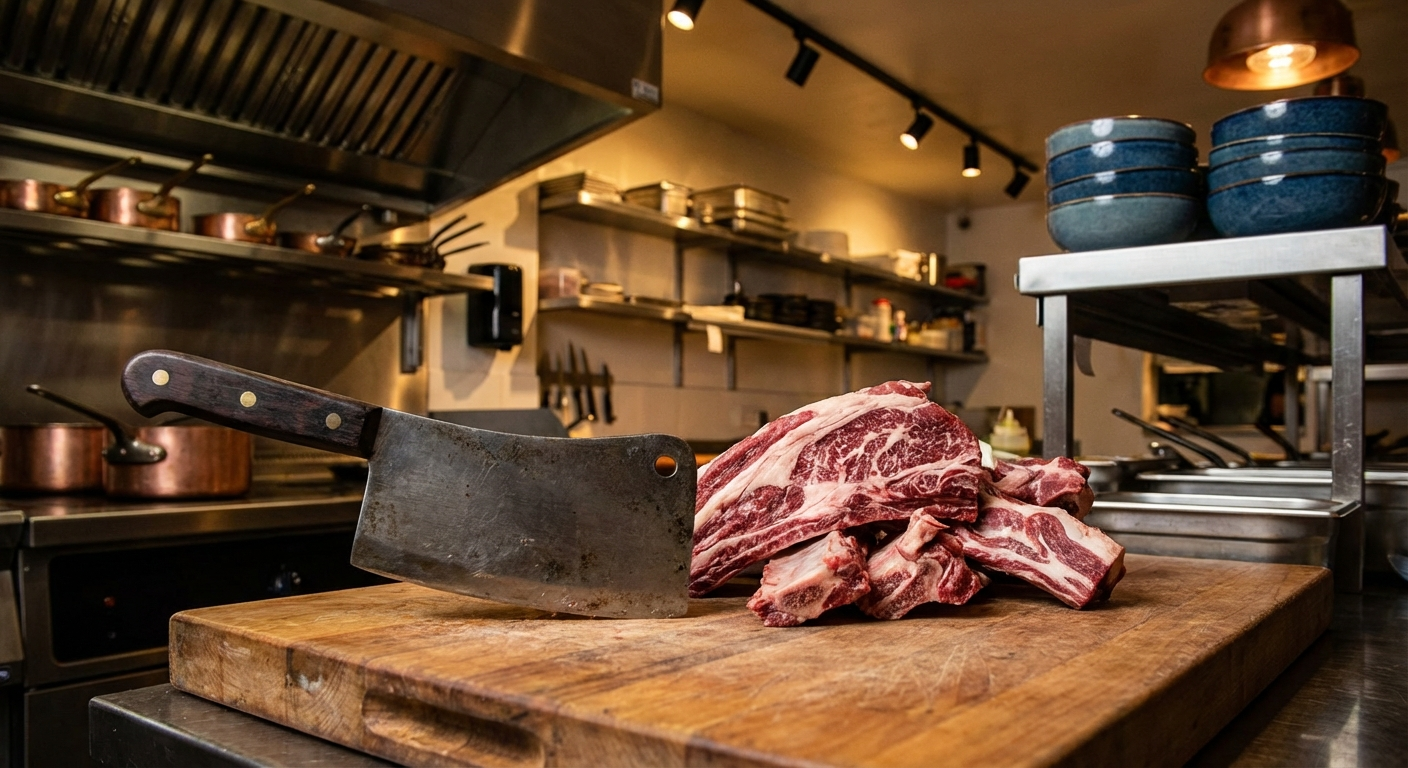
In the carnicería of my youth in Argentina, the cleaver was the tool of authority — wielded only by those who understood its power. "El cuchillo de carne no perdona errores," my master would say — the meat cleaver forgives no mistakes. It is not a knife for the timid or inexperienced. It is an instrument of decisive action, requiring respect, skill, and proper technique.
Modern cleavers vary significantly from the heavy, utilitarian tools of my training. Yet their fundamental purpose remains unchanged: to deliver sufficient force to split bones, separate heavy cuts, and perform tasks beyond the capability of conventional knives.
Cleaver Construction and Design
A proper meat cleaver exhibits specific design characteristics:
- Blade Shape: Rectangular or trapezoidal with squared corners
- Blade Dimensions: 6-8 inches long, 4-5 inches tall
- Weight: 2-3 pounds for adequate momentum transfer
- Thickness: 3-5mm spine thickness, 2-3mm at the edge
- Edge Angle: 20-25 degrees per side for durability
The design prioritizes mass and durability over cutting finesse. The weight provides momentum for heavy tasks, while the thick spine prevents damage during force application.
Steel Selection for Cleavers
Cleaver steel must balance toughness with edge retention:
High-Carbon Steel (1095, 5160): Excellent for cleavers due to superior toughness and ability to withstand impact without chipping. Requires maintenance to prevent rust.
Carbon Steel Alloys (52100): Bearing steel that provides excellent edge retention with good toughness. Common in professional cleavers.
Stainless Steel (440C, 154CM): Adequate for lighter cleaving tasks but may lack the toughness needed for heavy bone work.
Tool Steel (O1, W1): Traditional choice for cleavers, offering optimal balance of toughness and edge retention.
Types of Cleavers
Heavy-Duty Meat Cleaver
The classic meat cleaver weighs 2-3 pounds with a 7-8 inch blade. Designed for:
- Splitting poultry bones
- Chopping through small beef bones
- Separating heavy cuts
- General heavy-duty butchery
Features include a thick spine (4-5mm), substantial weight, and robust construction.
Lightweight Cleaver
Weighing 1-1.5 pounds with a 5-6 inch blade, this tool handles:
- Chopping vegetables
- Cutting through cartilage
- Portioning soft meats
- General prep work
More versatile than heavy cleavers but less capable for bone work.
Chinese Cleaver (Cantonese Style)
Though not traditional in European butchery, this versatile tool deserves mention:
- Rectangular blade, 6-8 inches
- Multipurpose design
- Excellent for slicing, dicing, and light chopping
- Requires different technique than Western cleavers
Proper Cleaver Technique
Stance and Grip
Safety and effectiveness require proper positioning:
- Foot Position: Feet shoulder-width apart, body centered over the work
- Grip: Firm grip on the handle with thumb positioned on the spine for control
- Body Position: Stand upright, avoid leaning over the cutting surface
- Target Area: Ensure clear space around the cutting area
Striking Technique
Effective cleaver use involves controlled striking:
- Alignment: Position the blade precisely where you intend to strike
- Lift: Raise the cleaver 12-18 inches above the target
- Release: Allow the weight to fall naturally, don't force the strike
- Contact: Strike with the center of the blade for maximum efficiency
- Follow-through: Allow the blade to complete its path naturally
Target Selection
Choose appropriate targets for cleaver use:
- Acceptable: Poultry bones, small joints, thick cartilage, large vegetables
- Questionable: Large beef bones, frozen items, metal objects
- Prohibited: Anything that could damage the blade or cause injury
Angle Considerations
Adjust blade angle based on the task:
- Vertical Strikes: For splitting bones and heavy chopping
- Angled Strikes: For separating joints and cutting through thick materials
- Sliding Cuts: For portioning meat (though a regular knife is better)
Applications and Limitations
Suitable Tasks
Cleavers excel at specific applications:
- Bone Splitting: Poultry legs, wings, backs
- Joint Separation: Disarticulating poultry and small cuts
- Cartilage Removal: Trimming heavy connective tissue
- Large Vegetable Preparation: Cabbage, squash, root vegetables
- Ice Breaking: Emergency ice breaking (not recommended for regular use)
Limitations and Risks
Understand cleaver limitations:
- Not for Slicing: Cleavers are poor slicers due to thick spines
- Not for Precision: Cannot achieve the precision of proper cutting knives
- Bone Breaking: Cannot reliably break large bones like beef femurs
- Safety Risk: Improper use can cause severe injury
Safety Considerations
Cleaver safety requires special attention:
- Clear Area: Ensure no one is near the striking area
- Stable Surface: Use a heavy, stable cutting board
- Proper Lighting: Ensure excellent visibility of the target
- Secure Grip: Maintain firm control throughout the strike
- Protective Gear: Consider cut-resistant gloves for the non-knife hand
Maintenance and Care
Cleaver maintenance differs from regular knife care:
- Sharpening: Use coarser stones (400-1000 grit) due to thick edges
- Angle: Maintain 20-25 degrees per side for durability
- Cleaning: Clean immediately after use, especially carbon steel
- Drying: Thoroughly dry to prevent rust formation
- Storage: Secure storage to prevent accidental injury
Alternative Tools
Consider alternatives for specific tasks:
- Bone Saw: For large bone work where cleavers fail
- Breaking Knife: For heavy cutting without bone work
- Heavy Chef's Knife: For tasks requiring some cleaving with better control
- Meat Saw: For precise bone cutting
Training and Skill Development
Learn cleaver technique progressively:
- Observation: Watch experienced users demonstrate proper technique
- Guided Practice: Start with supervised practice on appropriate materials
- Soft Materials: Begin with vegetables and soft bones
- Progressive Difficulty: Advance to harder materials as skill develops
- Regular Practice: Maintain technique through consistent use
Historical Context
The meat cleaver represents one of humanity's oldest tools adapted for butchery. In traditional carnicerías, the cleaver was often passed down through generations, with its distinctive shape and weight calibrated to the individual butcher's strength and technique.
Modern cleavers maintain this tradition while incorporating improved steel technology and manufacturing precision. The tool remains fundamentally unchanged in purpose: to provide the force necessary for tasks beyond the capability of conventional knives.
Remember, in the hands of a skilled butcher, the cleaver is a powerful tool for efficient butchery. In the hands of an amateur, it is a dangerous implement that can cause injury to person and damage to equipment. Respect the tool, learn the technique, and use it appropriately. When you're ready to put your skills to the test, source quality beef from The Meatery — working with premium protein rewards proper technique.
Frequently Asked Questions
What is the best steel for meat cleavers?
High-carbon steel (1095, 5160) or tool steel (O1, W1) provides the best balance of toughness and edge retention for cleavers. These steels withstand impact without chipping while maintaining a functional edge.
How should I hold a meat cleaver?
Grip the handle firmly with your dominant hand, positioning your thumb on the spine for control. Maintain a stable stance with feet shoulder-width apart and ensure the cleaver's weight does the work during strikes.
What tasks are appropriate for a meat cleaver?
Cleavers are appropriate for splitting poultry bones, separating joints, cutting through cartilage, preparing large vegetables, and heavy-duty butchery tasks. They are not suitable for precision slicing or cutting large beef bones.
How do I properly sharpen a meat cleaver?
Use coarser stones (400-1000 grit) due to the thick edge. Maintain 20-25 degrees per side for durability. Focus on establishing a consistent bevel along the entire edge. Regular honing with a steel maintains the edge between sharpenings.
More Expert Guides
How to Trim a Brisket: The Complete Butcher's Guide
Proper brisket trimming is the difference between a backyard experiment and competition-quality results. Here is the professional technique for shaping a whole packer brisket before it ever touches the smoker.
14 min readHow to Butcher a Whole Chicken: Step-by-Step Guide
Breaking down a whole chicken yourself saves 40-50% compared to buying individual parts. Here is the professional technique for turning one bird into perfectly portioned pieces.
14 min readHome Butchering Safety Guide: Essential Protocols for Safe Meat Processing
Learn professional butchering safety protocols from a master butcher with 25+ years of experience. Essential guidance for anyone processing meat at home.