Seam Cutting: The Art of Following Nature
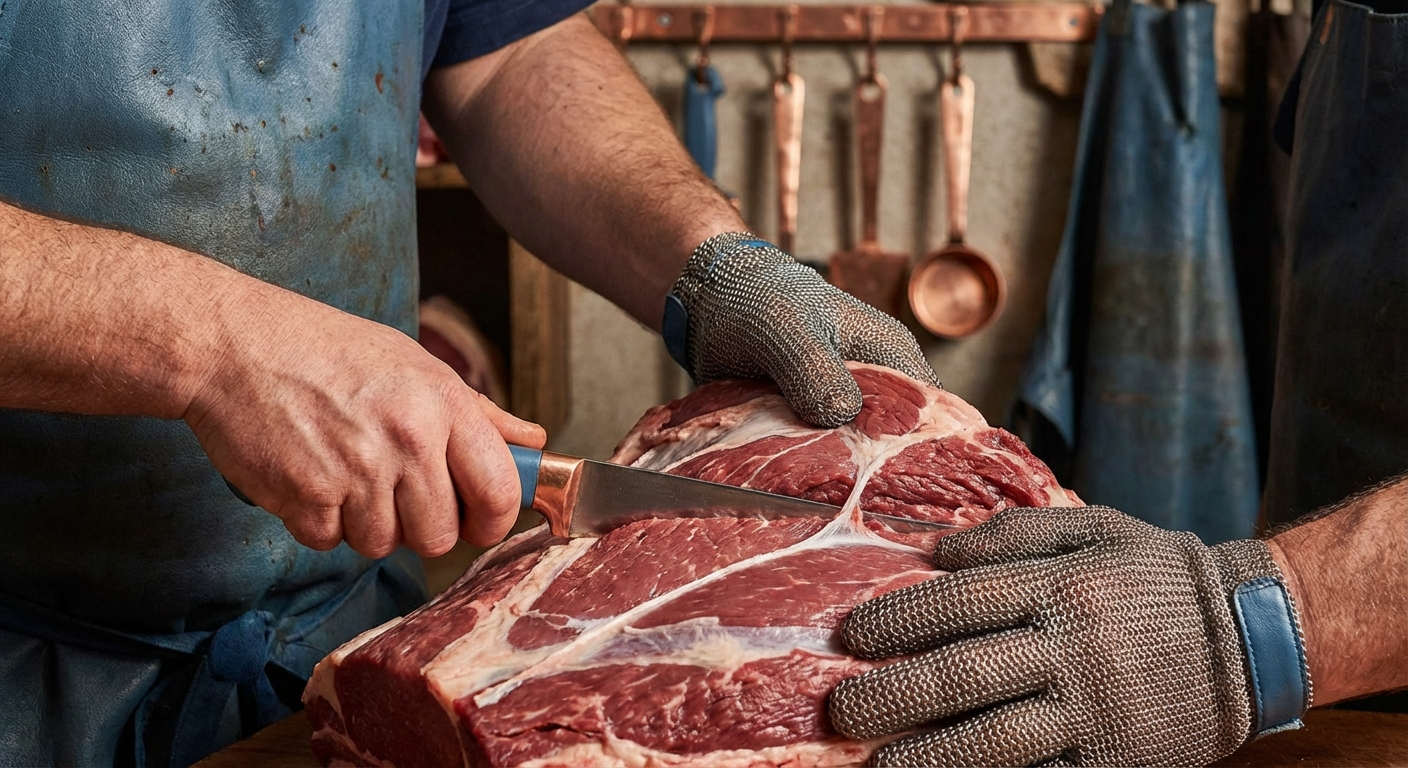
In my earliest days training in Buenos Aires, my master introduced me to a concept that would define my understanding of butchery: "Siembra con la naturaleza, no contra ella" — cut with nature, not against it. Seam cutting is this philosophy in practice — the art of following the animal's natural architecture to extract maximum value while preserving the integrity of each muscle group.
Unlike primal separation, which divides major sections, seam cutting operates at the micro-level, following the fascial planes that naturally separate individual muscles. It transforms a large, undifferentiated piece of meat into distinct, properly identified cuts — each with its own characteristics, value, and optimal preparation method.
Understanding Fascial Planes
Before attempting seam cutting, understand the connective tissue architecture:
- Fascia: Dense connective tissue that surrounds and separates muscle groups
- Intermuscular Connective Tissue: Connective tissue that lies between adjacent muscles
- Epimysium: Connective tissue that directly surrounds individual muscles
- Perimysium: Connective tissue that surrounds bundles within muscles
These tissues appear as thin, translucent membranes that create natural separation points. The skilled butcher learns to identify and follow these planes rather than cutting through them.
Seam Cutting Philosophy
Seam cutting follows these principles:
- Preservation: Maintain muscle integrity rather than dividing muscles unnecessarily
- Identification: Keep cuts properly identified for correct labeling and utilization
- Value: Extract higher-value cuts hidden within larger sections
- Efficiency: Minimize waste by removing only inedible connective tissue
The goal is not to create more pieces, but to create the right pieces — cuts that match their intended use.
Tools for Seam Cutting
Seam cutting requires specialized tools:
- Flexible Boning Knife: 6-inch blade with medium flexibility for navigating around muscles
- Stiff Boning Knife: For areas requiring more pressure and control
- Utility Knife: For detail work and trimming
- Hook Knife: For lifting and separating tight connections
The blade should be razor-sharp — seam cutting relies on precision rather than force. A dull blade tears tissue and destroys the clean separation that makes seam cutting valuable.
Technique Fundamentals
Identification Phase
Before making any cuts, identify the natural separation points:
- Examine the piece for visible fascial lines
- Feel for changes in tissue density and direction
- Look for color differences between muscle groups
- Identify the direction of muscle fiber alignment
This phase may take as long as the actual cutting — proper identification prevents costly mistakes.
Separation Technique
Follow these steps for clean separation:
- Initial Incision: Make a small cut at the identified separation point
- Blade Placement: Position the blade against the connective tissue, not the muscle
- Direction of Cut: Follow the natural plane, letting the sharp edge do the work
- Continuous Motion: Maintain steady, smooth movements without stopping mid-cut
- Pressure Control: Use minimal pressure — the sharp edge should glide through tissue
The Peeling Motion
Many seam cuts involve a peeling motion rather than a slicing motion:
- Lift the edge of the muscle with the knife tip
- Slide the blade along the separation plane
- Allow the blade to follow the natural curve of the muscle
- Peel the muscle away from its neighbor
This technique preserves muscle integrity while achieving clean separation.
Practical Applications
Chuck Roll Seam Cutting
The chuck roll contains several valuable cuts hidden within its structure:
Flat Iron Steak: Located in the infraspinatus muscle, this is the second most tender cut after the tenderloin. Identification involves:
- Locate the blade bone and the shoulder clod
- Identify the diamond-shaped muscle group
- Follow the natural connective tissue boundaries
- Remove in one piece for maximum value
Shoulder Tender: The teres minor muscle, another tender cut hidden in the chuck. Requires careful separation from surrounding muscles.
Rib Section Optimization
Within the rib primal, seam cutting reveals:
- Ribeye Cap: The spinalis dorsi muscle, which can be separated for premium pricing
- Chuck Eye: The continuation of ribeye muscle into the chuck, often overlooked
- Rib Medallions: Individual muscle sections that can be portioned separately
Round Primal Enhancement
The round primal benefits significantly from seam cutting:
- Top Round: Rectus femoris muscle, excellent for roasting
- Bottom Round: Biceps femoris, good for roasting or cube steaks
- Eye of Round: Vastus intermedius, suitable for thin-sliced preparations
- Sirloin Tip: Vastus lateralis, often sold as a separate roast
Proper seam cutting of a round primal can increase its value by 20-30%.
Advanced Seam Cutting Techniques
Hook Technique
For tight separations, use a hook knife to lift and separate:
- Insert the hook behind the muscle to be separated
- Lift the muscle away from its attachment
- Slide the straight knife along the separation plane
- Repeat until complete separation is achieved
Combination Method
Some separations require both cutting and tearing:
- Cut through the initial tough connective tissue
- Use the knife tip to widen the opening
- Peel the muscle apart with fingers (protected by cut-resistant gloves)
- Return to cutting for stubborn attachments
Layered Approach
Complex areas may require multiple passes:
- First pass: Remove obvious separations
- Second pass: Address remaining connections
- Third pass: Fine-tune and remove residual connective tissue
Quality Control in Seam Cutting
Maintain high standards throughout the process:
- Minimize Waste: Remove only inedible connective tissue
- Preserve Integrity: Avoid tearing or damaging muscle fibers
- Maintain Identification: Keep cuts properly separated for correct labeling
- Sanitation: Clean tools frequently to prevent cross-contamination
Common Mistakes to Avoid
Learning seam cutting requires avoiding these errors:
- Forcing Separations: If you encounter resistance, you may be cutting the wrong plane
- Over-trimming: Removing good meat along with connective tissue
- Poor Identification: Failing to properly identify muscle groups before cutting
- Inconsistent Technique: Changing approach mid-cut can damage the meat
- Ignoring Fiber Direction: Cutting against muscle grain creates unnecessary resistance
Developing Seam Cutting Skill
Master seam cutting through progressive practice:
- Study Anatomy: Understand muscle structure before attempting separation
- Start Simple: Practice on obvious separations before attempting complex areas
- Slow Down: Speed comes with experience; accuracy comes with patience
- Learn from Mistakes: Each incorrect cut teaches about proper technique
- Seek Mentorship: Observe experienced butchers to learn advanced techniques
Economic Impact of Seam Cutting
Proper seam cutting significantly impacts profitability:
- Increases yield of high-value cuts by 15-25%
- Reduces waste by removing only inedible tissue
- Improves portion control and consistency
- Enables proper cut identification and pricing
In commercial operations, skilled seam cutting can improve margins by 8-12%.
Seam cutting represents the highest level of butchery skill — transforming a basic understanding of anatomy into practical extraction of maximum value. It honors the animal by ensuring every portion finds its highest and best use. For those looking to practice this craft at home, whole sub-primals from The Meatery provide excellent learning material.
Frequently Asked Questions
What is seam cutting?
Seam cutting is a precision butchery technique that follows natural fascial planes and connective tissue to separate individual muscles while preserving their integrity. It maximizes value by extracting specific cuts from larger sections.
What tools are needed for seam cutting?
Essential tools include flexible and stiff boning knives (6-inch), utility knife for detail work, and hook knife for lifting tissue. The knife must be extremely sharp since seam cutting relies on precision, not force.
How does seam cutting differ from regular cutting?
Regular cutting divides large sections without regard for muscle boundaries. Seam cutting follows natural separation planes between muscles, preserving individual muscle integrity and extracting higher-value cuts hidden within sections.
What are the benefits of seam cutting?
Benefits include increased yield of high-value cuts (15-25%), reduced waste, proper cut identification for correct pricing, improved portion consistency, and enhanced economic returns in commercial operations.
More Expert Guides
How to Trim a Brisket: The Complete Butcher's Guide
Proper brisket trimming is the difference between a backyard experiment and competition-quality results. Here is the professional technique for shaping a whole packer brisket before it ever touches the smoker.
14 min readHow to Butcher a Whole Chicken: Step-by-Step Guide
Breaking down a whole chicken yourself saves 40-50% compared to buying individual parts. Here is the professional technique for turning one bird into perfectly portioned pieces.
14 min readHome Butchering Safety Guide: Essential Protocols for Safe Meat Processing
Learn professional butchering safety protocols from a master butcher with 25+ years of experience. Essential guidance for anyone processing meat at home.