How to Break Down a Beef Short Loin: Complete Butcher's Guide
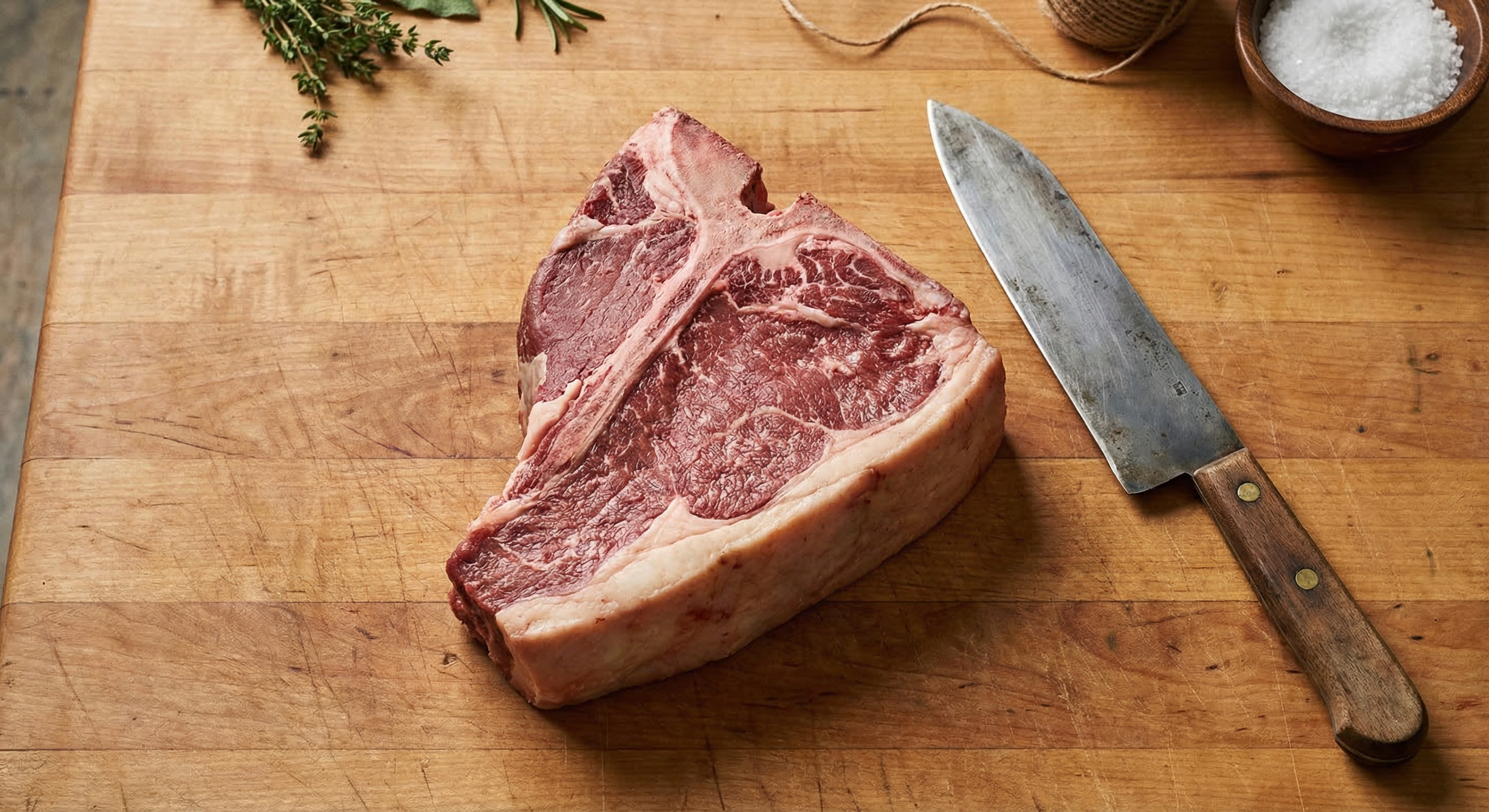
The beef short loin sits between the rib primal and the sirloin, spanning roughly the 13th rib back through the 6th lumbar vertebra. It represents about 8 percent of total carcass weight, but it accounts for a disproportionate share of a steer's retail value. This single primal produces T-bone steaks, porterhouse steaks, bone-in and boneless New York strips, and a generous section of the tenderloin — cuts that command premium prices at any butcher counter or steakhouse.
Buying a whole short loin from a wholesale supplier or warehouse club typically costs $9 to $14 per pound for USDA Choice, while individual cuts from that same primal retail for $18 to $30 per pound. On a 35-pound short loin, that price difference can save you $200 or more. Beyond cost savings, you control exactly how thick each steak gets cut, how much fat stays on, and whether you portion the tenderloin separately or leave it attached for bone-in cuts.
This guide walks through every step of breaking down a whole bone-in beef short loin, from initial assessment through final steak portioning and storage.
Anatomy of the Short Loin
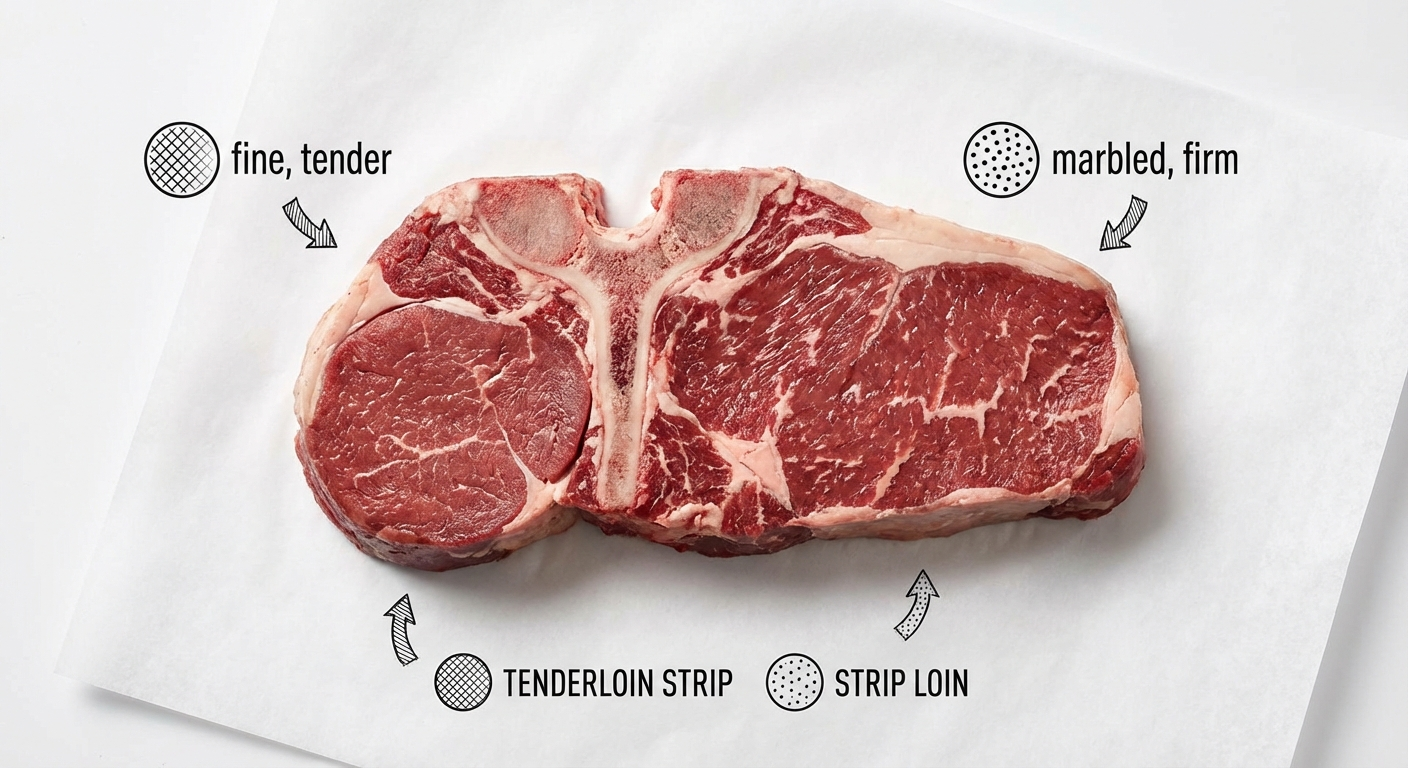
Understanding the internal structure of the short loin is essential before making any cuts. Unlike primals such as the chuck or round where you navigate complex muscle groups, the short loin is relatively straightforward — but the relationship between the bone, the strip, and the tenderloin determines whether you produce T-bones, porterhouse steaks, or separate boneless cuts.
Bone Structure
- Lumbar vertebrae: The backbone of the short loin — literally. Five to six lumbar vertebrae run along the top, and their distinctive T-shaped transverse processes create the "T" in a T-bone steak. The transverse processes extend downward and outward, separating the strip loin from the tenderloin.
- 13th rib: The short loin begins at the 13th (and final) rib. On the rib end of the primal, you may see a small curved section of this rib still attached. It needs to be removed during breakdown.
- Finger bones (transverse processes): These flat, wing-like extensions of the vertebrae are the key structural feature. Their length determines whether a steak qualifies as a T-bone or a porterhouse, because the tenderloin is larger where the finger bones are shorter (toward the sirloin end).
Major Muscles
- Longissimus dorsi (strip loin / New York strip): The large muscle running along the top side of the T-bone. This is the same muscle as the ribeye, continuing from the rib primal into the loin. In the short loin, it becomes leaner and slightly firmer than in the rib section, with a distinct beefy flavor and moderate marbling. It increases slightly in size from the rib end to the sirloin end.
- Psoas major (tenderloin): The small, torpedo-shaped muscle running along the underside of the T-bone. This is the most tender muscle on the entire animal because it does almost no work during the steer's life. The tenderloin starts very small at the rib end of the short loin (where T-bones come from) and grows progressively larger toward the sirloin end (where porterhouse steaks come from).
- Gluteus medius: Present only at the very sirloin end of the short loin as a small wedge. It is part of the sirloin complex and appears in the last steak or two cut from the sirloin end.
Fat Layers
- External fat cap: A layer of subcutaneous fat covering the top and outer surface of the strip loin. Typically half an inch to one inch thick on Choice-grade beef. You will trim some of this during breakdown but should leave a quarter-inch layer on finished steaks for flavor during cooking.
- Kidney fat (suet): A thick deposit of hard, white fat on the tenderloin side of the primal. This is kidney fat that was left on during initial carcass fabrication. It must be completely removed — it does not render well and has an unpleasant waxy texture when cooked.
- Intramuscular fat (marbling): The white flecks within both the strip and tenderloin muscles. The strip typically shows more visible marbling than the tenderloin. Higher grades (Choice, Prime) have significantly more marbling throughout.
Tools You Need
Breaking down a short loin is less physically demanding than a rib or chuck primal because the bone structure is more predictable and the muscles are easier to follow. However, you still need the right equipment to produce clean, professional-looking steaks.
- Boning knife (6-inch, stiff): Your primary tool for removing the tenderloin, cleaning silver skin, and working around the vertebrae. A stiff blade gives better control than a flexible one when working against bone. The industry standard is the Victorinox Fibrox Pro 6-inch boning knife.
- Breaking knife or cimeter (10-12 inch): For trimming the exterior fat cap and making long, sweeping cuts through large muscle sections. The curved blade allows single-stroke cuts.
- Bone saw (hand or band saw): Essential for cutting through the lumbar vertebrae when portioning bone-in steaks. A hand bone saw works but requires more effort and produces less consistent thickness. A band saw is the professional standard for steak portioning.
- Honing steel: You will need to realign your blade edges several times. Bone contact dulls knives quickly.
- Large cutting board (24 x 36 inches minimum): A whole short loin runs about 24 inches long and weighs 30 to 40 pounds. You need adequate work space.
- Kitchen scale: For consistent portioning. A 16-ounce bone-in strip should actually weigh 16 ounces, not "about a pound."
- Sheet trays: For organizing finished steaks, trim, and bones as you work.
Step 1: Initial Assessment and Trimming
Before making any structural cuts, assess the primal and remove excess external material that will only get in your way during the breakdown.
Place the short loin on your cutting board with the fat cap facing up and the backbone running along the top edge. The rib end (where the 13th rib may still be attached) faces one direction, and the sirloin end (where the tenderloin is largest) faces the other.
Remove the Flank Edge
On the underside of the short loin, you may find a thin flap of meat extending below the main body of the primal. This is the flank edge — a thin, tough section of the oblique muscles. Using your breaking knife, trim this flap by cutting in a straight line roughly two inches below the eye of the strip loin. Follow the natural fat seam as a guide. Set the flank trim aside for grinding or stew meat.
Remove the Kidney Fat
Flip the short loin so the tenderloin side faces up. You will likely see a thick deposit of hard, white kidney fat (suet) covering part or all of the tenderloin. This fat must come off completely. Grab one edge of the kidney fat and pull it away from the tenderloin while using your boning knife to cut the connective tissue holding it to the meat. The fat should pull away in large sheets. Be thorough — any kidney fat left on steaks creates an unpleasant waxy mouthfeel.
Remove the 13th Rib (if present)
At the rib end of the primal, check for the 13th rib bone. If it is still attached, use your boning knife to trace along the bone surface, separating the meat from the rib. Work the knife tip along the contour of the bone from top to bottom, then lever the rib away from the meat. Set it aside for stock.
Step 2: Decide Your Cut Strategy
This is the critical decision point. The short loin gives you three main options, and you must decide before making any structural cuts because the approaches are mutually exclusive once you start cutting.
Option A: Bone-In Steaks (T-Bones and Porterhouse)
Leave the tenderloin attached to the bone and cut across the entire width of the short loin to produce bone-in steaks. Steaks cut from the rib end (where the tenderloin is small, under 1.25 inches across) are T-bones. Steaks cut from the sirloin end (where the tenderloin is 1.25 inches or wider) are porterhouse steaks. The USDA standard requires the tenderloin to be at least 1.25 inches wide at the widest point for the porterhouse designation.
This is the classic steakhouse approach and produces the most visually impressive steaks, but you sacrifice some portioning flexibility.
Option B: Separate the Tenderloin, Bone-In Strips
Remove the entire tenderloin first, then cut the remaining bone-in strip loin into individual bone-in New York strip steaks. The tenderloin gets portioned separately into filet mignon steaks or left whole for roasting. This approach maximizes the value of both muscles because you can cut each to its ideal thickness independently.
Option C: Fully Boneless
Remove the tenderloin, then remove the strip loin from the bone entirely. This gives you a boneless strip loin and a section of tenderloin — both can be portioned into boneless steaks at any thickness you want. You lose the bone-in presentation but gain the most portioning control.
For this guide, we will walk through Option B (separate tenderloin, bone-in strips) because it is the most versatile and produces the best overall yield. We will also cover Option A for those who prefer bone-in T-bones and porterhouse.
Step 3: Remove the Tenderloin
Removing the tenderloin from the short loin is a straightforward but precision-dependent task. The tenderloin sits in a channel formed by the transverse processes (finger bones) of the vertebrae and is held in place by connective tissue rather than interlocking bone structure.
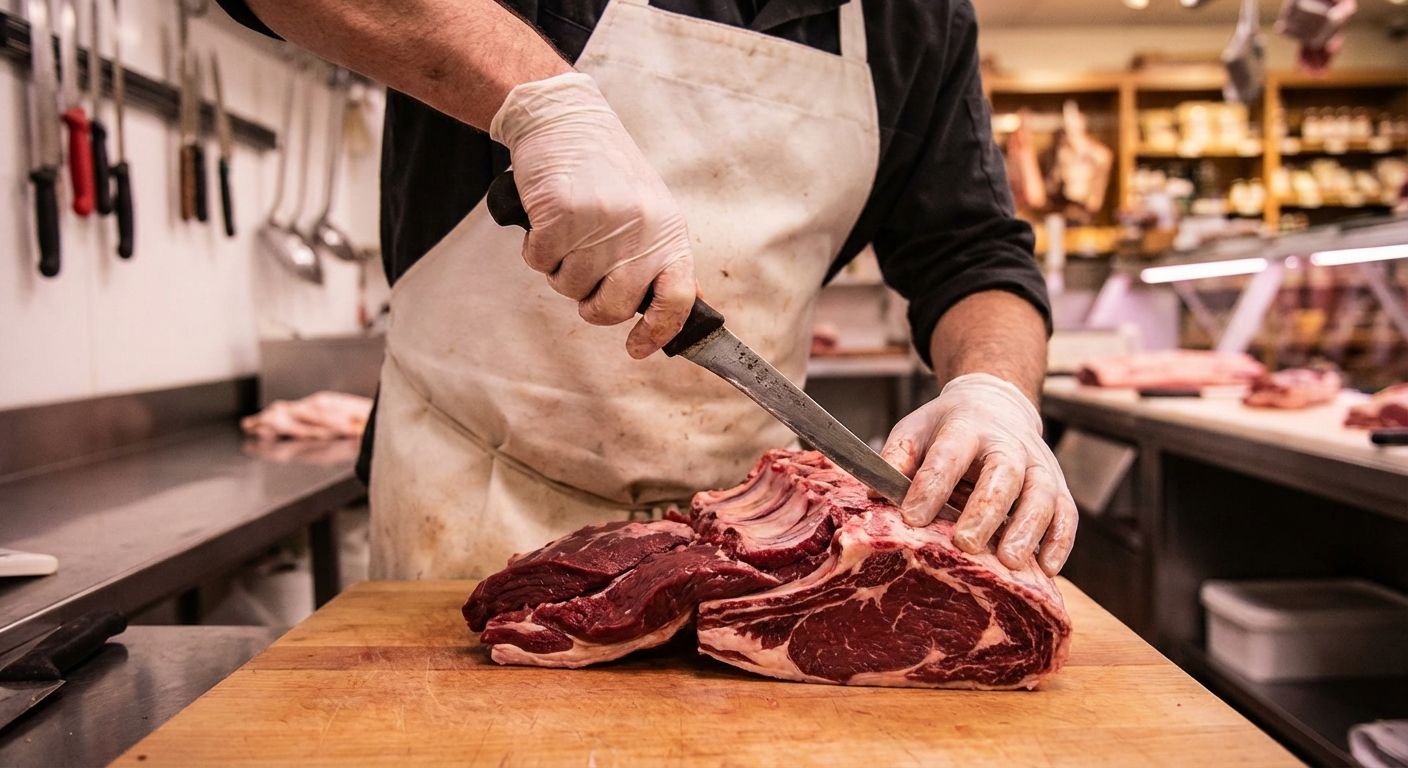
Position the short loin on the cutting board with the tenderloin side facing up. You should be able to see the tenderloin muscle running alongside the vertebrae, separated from the strip loin by the transverse processes of the lumbar vertebrae.
- Start at the sirloin end where the tenderloin is largest and easiest to identify. Insert your boning knife between the tenderloin and the transverse process of the vertebra. Keep the blade flat against the bone surface.
- Run the knife along the bone from the sirloin end toward the rib end, letting the blade follow the contour of the transverse processes. Use short, controlled strokes rather than one long cut. The goal is to separate the tenderloin from the bone without cutting into the meat.
- Free the outer edge. The tenderloin is also attached along its outer edge by a membrane and fat. Cut through this attachment, pulling the tenderloin gently away from the bone as you go.
- Lift the tenderloin free. Once both the inner (bone) and outer (membrane) attachments are cut, the tenderloin lifts away as a single piece. At the rib end, it tapers to a thin tail — make sure to cut all the way through rather than tearing the meat.
Cleaning the Tenderloin
The removed tenderloin will have a thick layer of silver skin, some chain meat, and possibly remaining kidney fat attached. Clean it by:
- Removing silver skin: Slide your boning knife under the silver skin at the narrow end, angle the blade slightly upward, and pull the silver skin taut while cutting forward. Work in strips. Silver skin does not break down during cooking and creates a chewy, unpleasant texture if left on.
- Trimming chain meat: The chain is a loose, ragged strip of meat running along one side of the tenderloin. Pull it away and trim it off. It is good for grinding or stir-fry but is too irregular for steaks.
- Removing side muscle: A small, flat muscle (the psoas minor) runs along part of the tenderloin. It separates cleanly and can be used for stroganoff or stir-fry.
The cleaned tenderloin from a short loin is typically 10 to 14 inches long and weighs 2.5 to 4 pounds. It yields 4 to 6 filet mignon steaks cut 1.5 to 2 inches thick, plus the tapered tail end that works for medallions or tips.
Step 4: Portion Bone-In Strip Steaks
With the tenderloin removed, you are left with the bone-in strip loin — the longissimus dorsi muscle still attached to the lumbar vertebrae and their transverse processes. This is where you produce bone-in New York strip steaks.
Trim the Fat Cap
Before portioning, examine the external fat cap on the strip loin. You want to leave approximately a quarter inch of fat on the surface for flavor during cooking, but anything beyond that should be trimmed. Use your breaking knife to shave the fat cap down to an even quarter-inch layer across the entire length of the strip. This step also cleans up the presentation of each steak.
Mark Your Cuts
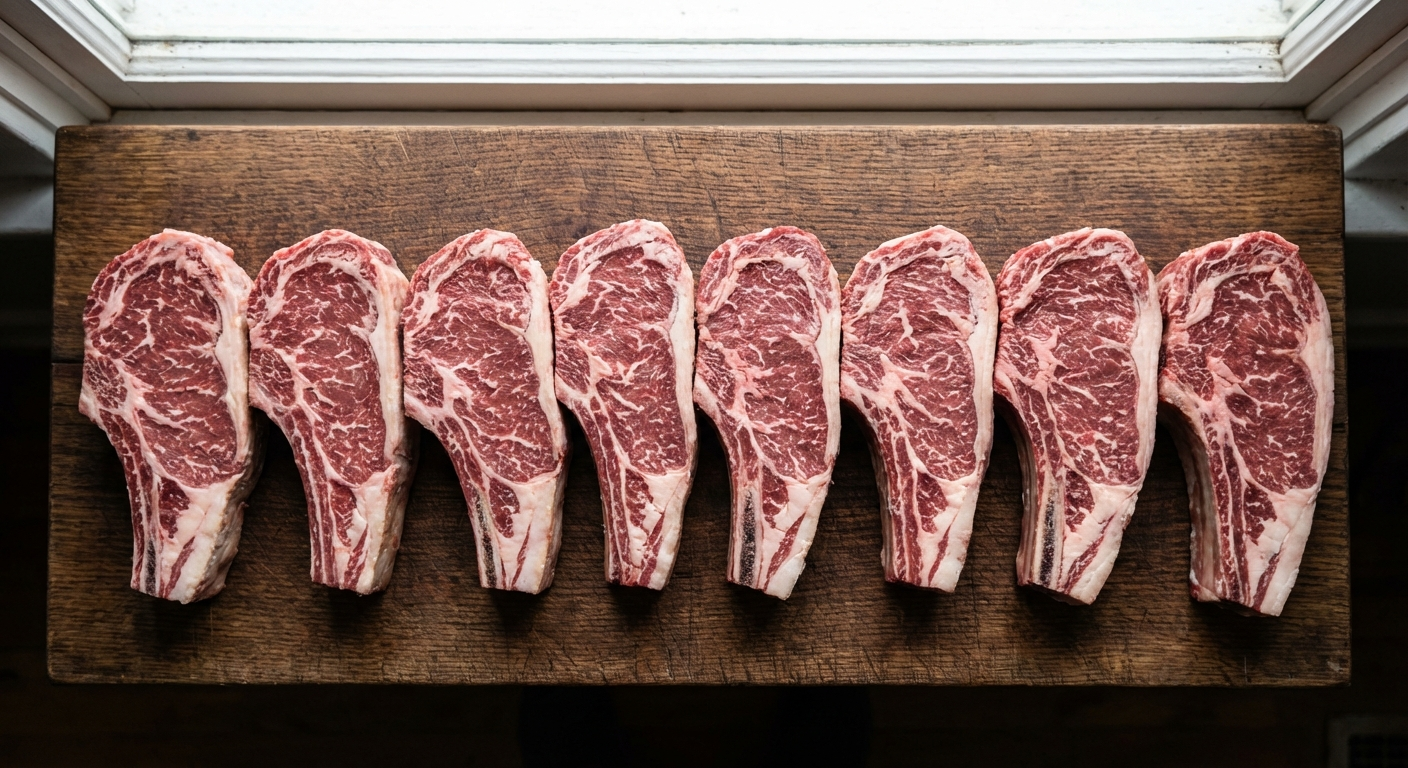
A bone-in strip steak should be 1.25 to 1.5 inches thick for optimal cooking. Thinner steaks overcook too quickly; thicker steaks are harder to sear properly without overcooking the exterior before the center reaches temperature.
Using the tip of your knife, score light marks across the fat cap at your desired thickness intervals. On a standard short loin, you should get 10 to 14 steaks depending on thickness. Count the vertebrae as additional reference points — each steak typically spans one vertebra.
Cut Through
Using your bone saw, cut straight down through the meat and bone at each mark. The key to clean bone-in steaks is:
- Keep the saw perpendicular to the cutting surface. Angled cuts produce steaks that are thicker on one side than the other.
- Use steady, even strokes. Let the saw do the work rather than forcing it. Aggressive pressure creates bone dust and ragged edges.
- Cut through completely in one pass if possible. Starting and stopping a bone saw cut often creates step marks on the bone surface.
If using a band saw, feed the strip loin through at a consistent speed, keeping your fingers well clear of the blade. Use a push stick for the final inches.
Each finished bone-in strip steak should weigh between 14 and 20 ounces depending on the size of the primal and your cut thickness. The rib end steaks will be slightly larger in the eye, while sirloin end steaks may include a small amount of gluteus medius muscle.
Alternative: T-Bone and Porterhouse Steaks (Option A)
If you chose Option A — keeping the tenderloin attached for bone-in steaks with both muscles — the process differs from Step 3 onward.
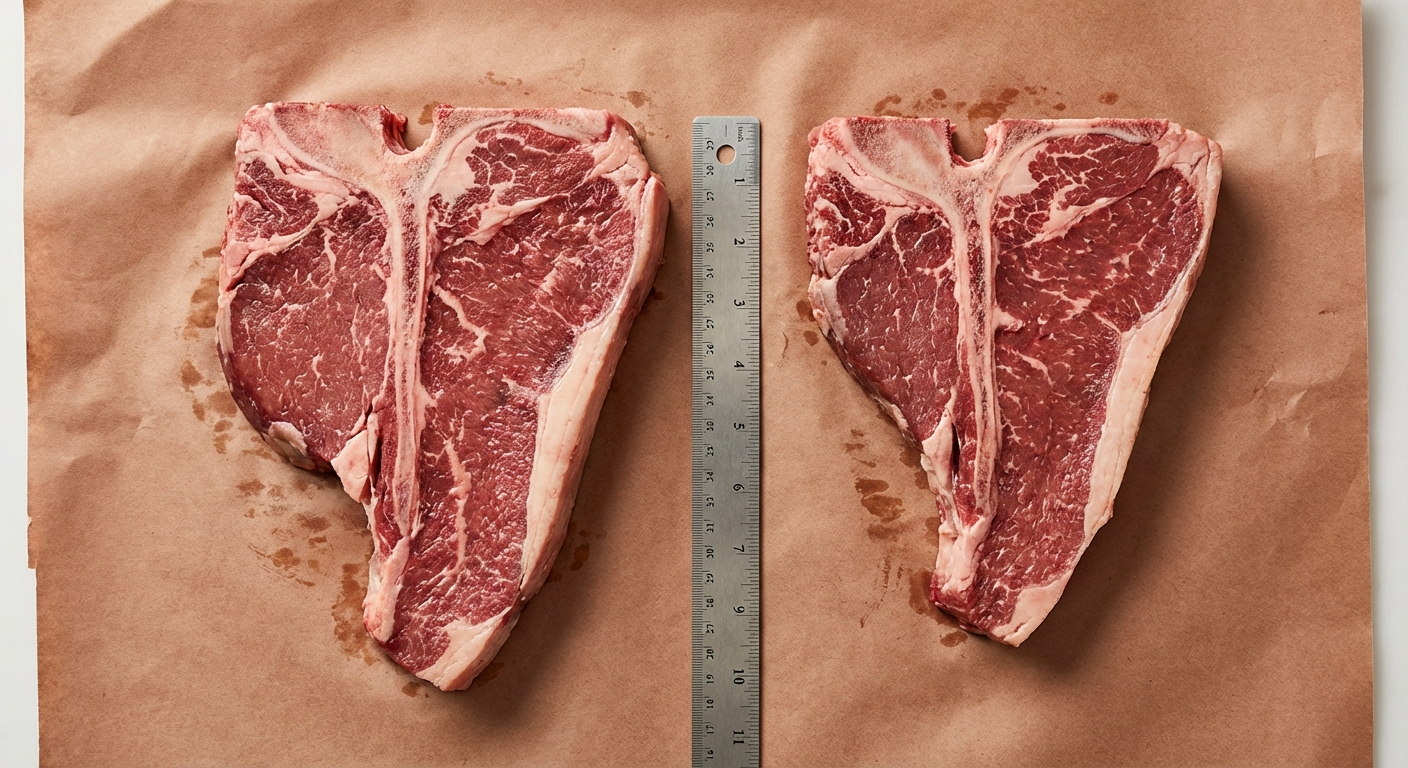
Instead of removing the tenderloin, you keep it in place and cut across the entire short loin — strip, bone, and tenderloin together — to produce steaks with both muscles on either side of the T-shaped bone.
Setup
Complete the initial trimming (Step 1) but skip Step 3 entirely. Position the short loin with the fat cap facing up and the backbone at the top.
Portioning
- Start from the sirloin end. This is where the tenderloin is largest, producing your porterhouse steaks first. Cut 1.25 to 1.5 inch thick steaks using your bone saw, working from the sirloin end toward the rib end.
- Monitor the tenderloin size. As you progress toward the rib end, the tenderloin section becomes progressively smaller. Once the tenderloin portion drops below 1.25 inches wide (measured at the widest point across the filet), you have crossed from porterhouse into T-bone territory. A typical short loin yields 3 to 5 porterhouse steaks and 5 to 8 T-bone steaks.
- The last steak at the rib end may have a very small tenderloin section or none at all. This is sometimes sold as a "club steak" — essentially a bone-in strip with minimal tenderloin.
T-Bone vs. Porterhouse: The Official Distinction
The USDA Institutional Meat Purchase Specifications (IMPS) define the difference precisely:
- Porterhouse: The tenderloin section must be at least 1.25 inches wide, measured parallel to the length of the bone at the widest point.
- T-bone: The tenderloin section must be at least 0.5 inches wide but less than 1.25 inches.
- Bone-in strip (club steak): The tenderloin section is less than 0.5 inches wide.
This matters commercially because porterhouse commands a higher price per pound than T-bone, and mislabeling carries regulatory consequences.
Yield and Storage
A typical 35-pound USDA Choice bone-in beef short loin produces the following approximate yield when broken down using Option B (separated tenderloin, bone-in strips):
- Bone-in New York strip steaks: 18 to 22 pounds (10-14 steaks at 1.25-1.5 inches thick)
- Cleaned tenderloin: 2.5 to 4 pounds (4-6 filet mignon steaks)
- Bones and trim: 4 to 6 pounds (stock material)
- Fat and waste: 5 to 7 pounds
Total usable retail cuts represent roughly 60 to 70 percent of the starting weight, with an additional 10 to 15 percent usable as stock bones and grinding trim.
Storage Recommendations
- Refrigerator (32–38°F): Use portioned steaks within 3 to 5 days. Keep them on a wire rack set inside a sheet tray, loosely covered, to allow air circulation and prevent moisture buildup.
- Vacuum sealed and frozen (0°F): Properly vacuum-sealed steaks maintain quality for 6 to 12 months. Remove as much air as possible before sealing. Label each package with the cut, weight, date, and grade.
- Butcher paper and frozen: If you do not have a vacuum sealer, wrap steaks tightly in plastic wrap, then in butcher paper. Freezer life drops to 3 to 4 months before quality degradation becomes noticeable.
Common Mistakes to Avoid
Having broken down hundreds of short loins, these are the errors I see most frequently among home butchers:
- Cutting into the tenderloin when removing it. The most expensive muscle on the animal, and people rush through the removal. Take your time. Let the knife follow the bone, not the path of least resistance through the meat.
- Not removing all the kidney fat. It is easy to leave small patches behind, especially in the crevice between the tenderloin and the vertebrae. Kidney fat is waxy and unpleasant — get it all off.
- Leaving too much silver skin on the tenderloin. Silver skin contracts when heated, causing the filet to curl and cook unevenly. Remove every visible strip.
- Inconsistent steak thickness. Steaks of varying thickness cook at different rates, making it impossible to bring multiple steaks to the same doneness simultaneously. Measure and mark before cutting.
- Angled saw cuts. Even a five-degree angle produces noticeably uneven steaks. Keep the saw perpendicular and use the scored marks as guides.
- Trying to saw through bone with a knife. Knives are for meat and connective tissue. Bones require a saw. Attempting to cut vertebrae with a knife dulls the blade instantly and produces dangerous bone shards.
Sourcing a Whole Short Loin
Whole short loins are available from several sources, with significant price variation:
- Wholesale clubs (Costco, Restaurant Depot): USDA Choice whole short loins typically run $9 to $13 per pound. Selection varies by location and season. Restaurant Depot requires a business license for membership.
- Local butcher shops: Many butcher shops will sell you a whole primal at a discount compared to individual steaks. Expect $11 to $16 per pound for Choice, more for Prime. The advantage is selection — a good butcher lets you pick the specific piece.
- Online wholesale (Crowd Cow, Porter Road, Snake River Farms): Premium options including Prime, American Wagyu, and specialty breeds. Prices range from $14 to $40+ per pound depending on grade and brand. Shipped vacuum-sealed and frozen.
- Direct from ranches: If you have relationships with local cattle ranchers, buying by the primal can be the most cost-effective route, especially during processing season (fall).
When selecting a whole short loin, look for consistent fat cover (no bare spots), firm meat with visible marbling, and a clean, fresh smell. Avoid primals with excessive blood pooling in the packaging or any off odors. The external fat should be white to cream-colored, not yellow (which indicates an older animal or excessive grain finishing).
Breaking down a whole beef short loin is one of the most rewarding home butchering projects because the ratio of effort to value is exceptional. In under an hour, you produce a freezer full of steakhouse-quality cuts at wholesale prices. As with all butchering, the skills compound — your fifth short loin will take half the time of your first, with significantly better results.
Frequently Asked Questions
What is the difference between a T-bone and a porterhouse steak?
Both come from the short loin and feature strip and tenderloin on either side of a T-shaped bone. The USDA defines a porterhouse as having a tenderloin section at least 1.25 inches wide. T-bones have a tenderloin between 0.5 and 1.25 inches wide. Porterhouse steaks come from the sirloin end of the short loin where the tenderloin is larger.
How many steaks can I get from a whole short loin?
A typical whole beef short loin yields 10 to 14 bone-in steaks cut 1.25 to 1.5 inches thick. If you separate the tenderloin first (Option B), you get 10-14 bone-in New York strips plus 4-6 filet mignon steaks from the tenderloin. If you cut T-bones and porterhouse (Option A), expect 8-13 steaks total.
Do I need a band saw to break down a short loin?
You need some type of bone saw for cutting through the lumbar vertebrae when portioning bone-in steaks. A hand bone saw works but requires more effort and produces less consistent thickness. For the fully boneless option (Option C), you can get by without a saw by removing both muscles from the bone using only a boning knife.
How much does a whole beef short loin cost?
USDA Choice whole short loins typically cost $9 to $14 per pound at wholesale clubs or from butcher shops selling whole primals. A 35-pound short loin runs roughly $315 to $490 total. The same cuts purchased individually at retail would cost $630 to $1,050, making the whole primal a significant savings.
How long does it take to break down a whole short loin?
An experienced butcher can break down a whole short loin in 20 to 30 minutes. A first-time home butcher should expect 45 minutes to an hour, including trimming, portioning, and cleanup. The process becomes significantly faster with practice since the short loin has a relatively simple structure compared to other primals.
More Expert Guides
How to Trim a Brisket: The Complete Butcher's Guide
Proper brisket trimming is the difference between a backyard experiment and competition-quality results. Here is the professional technique for shaping a whole packer brisket before it ever touches the smoker.
14 min readHow to Butcher a Whole Chicken: Step-by-Step Guide
Breaking down a whole chicken yourself saves 40-50% compared to buying individual parts. Here is the professional technique for turning one bird into perfectly portioned pieces.
14 min readHome Butchering Safety Guide: Essential Protocols for Safe Meat Processing
Learn professional butchering safety protocols from a master butcher with 25+ years of experience. Essential guidance for anyone processing meat at home.