Primal Cuts of Pork: A Butcher's Complete Guide to Every Section
Primal Cuts of Pork: A Butcher's Complete Guide
A whole hog on the rail is an impressive sight, but every experienced butcher sees it the same way: four primals waiting to be separated. Understanding pork primals is the starting point for efficient fabrication, accurate pricing, and intelligent cooking recommendations. Unlike beef with its eight primals, pork is broken into just four — but each one contains a surprising range of subprimals and retail cuts with very different characteristics.
Whether you are breaking down your first whole hog at home or training new staff in a commercial shop, this guide covers the butcher terminology, anatomy, subprimals, and cooking applications for every section of the pig.
Understanding Pork Primal Cuts
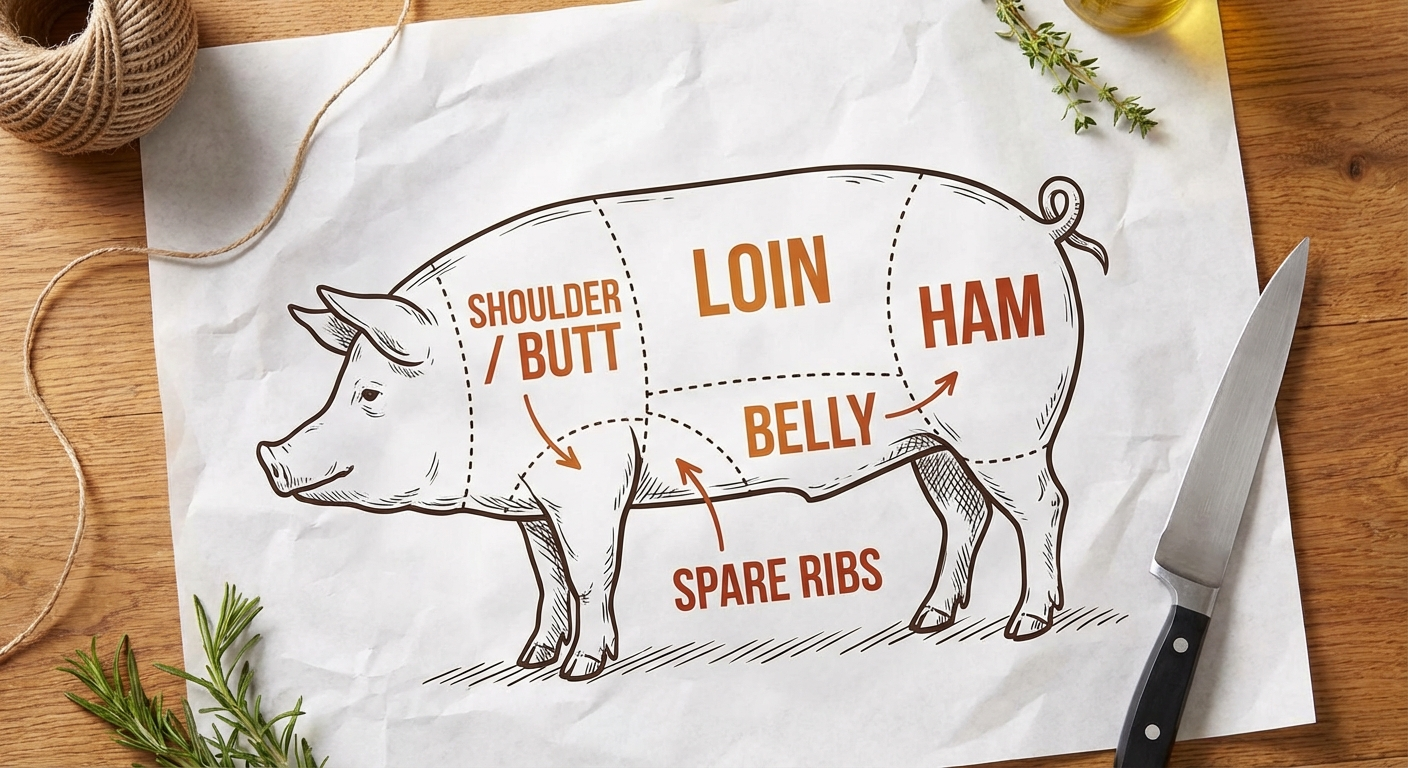
When a hog is slaughtered and dressed, the carcass is split down the spine into two sides. Each side is then divided into four primal cuts:
- Shoulder (front quarter, including the butt and picnic)
- Loin (the back, from shoulder to hip)
- Belly (the underside, also called the side)
- Ham (the rear leg)
The hierarchy mirrors beef: primals are broken into subprimals, which are then fabricated into retail cuts. The difference is scale — pork subprimals are smaller and more manageable than beef, making whole-hog butchering more accessible for home processors.
Yield Expectations
A typical market hog weighing 250–280 pounds live yields a hanging carcass of about 180 pounds (72% dressing percentage). From that carcass, expect roughly:
- Shoulder: 24–26% of carcass weight
- Loin: 20–22% of carcass weight
- Belly: 14–16% of carcass weight
- Ham: 24–26% of carcass weight
- Spareribs, jowl, feet, trim: remaining 10–18%
1. The Shoulder (Boston Butt and Picnic)
The shoulder primal is the front quarter of the hog, from the neck back to roughly the fourth or fifth rib. It is divided into two distinct subprimals — the Boston butt (upper shoulder) and the picnic (lower shoulder and foreleg) — each with very different characteristics and applications.
The shoulder does the most work of any section on the pig. All that movement builds connective tissue and collagen, which is exactly why it is the gold standard for low-and-slow barbecue. That connective tissue melts during extended cooking, transforming tough muscle into silky, pull-apart tenderness.
Boston Butt
Despite the name, the Boston butt comes from the top of the shoulder, not the rear end. The name dates to colonial New England, where this cut was packed into barrels called "butts" for storage and shipping. It weighs 6–9 pounds bone-in and contains excellent intramuscular marbling.
- Bone-In Pork Butt
- The whole butt with the blade bone still inside. Preferred for smoking because the bone adds flavor and helps the meat cook evenly. This is the classic cut for pulled pork — smoked at 225–250°F for 12–16 hours until the internal temperature reaches 200–205°F.
- Boneless Pork Butt
- Blade bone removed. Easier to slice or portion for stew meat, kebabs, or country-style ribs. Also used for sausage making because of its ideal 70/30 lean-to-fat ratio.
- Country-Style Ribs
- Cut from the blade end of the butt. Despite the name, they are not actual ribs — they are thick slabs of shoulder meat with good marbling. Excellent braised or grilled over indirect heat.
- Pork Collar / Coppa
- The muscle that runs along the top of the neck into the shoulder. In Italian charcuterie, this becomes coppa or capicola — dry-cured with spices and aged. As a fresh cut, the collar has exceptional marbling and is increasingly popular with chefs for grilling.
Picnic Shoulder
The picnic is the lower half of the shoulder, extending from below the butt down to the foreleg. It weighs 6–8 pounds and is leaner and tougher than the butt, with more sinew and a thicker skin cap.
- Bone-In Picnic
- Often sold skin-on. The skin crisps beautifully when roasted at high heat, making this the traditional cut for pernil (Puerto Rican roast pork) and German Schweinshaxe. Requires long cooking — 4–6 hours at low temperatures — to break down the connective tissue.
- Picnic Ham (Smoked Picnic)
- When cured and smoked, the picnic becomes a budget-friendly alternative to ham. The flavor is excellent, though the texture is more fibrous than a true ham from the rear leg.
- Arm Roast
- A cross-section cut from the foreleg, including a round bone. Braised like a pot roast, it yields rich, flavorful meat that falls off the bone.
- Hocks (Front)
- The lower foreleg, rich in collagen. Essential for soups, beans, and stock. Smoked hocks are a staple of Southern and German cooking.
Best Cooking Methods for Shoulder
Low-and-slow smoking (pulled pork), braising, stewing, roasting, and sausage making. The butt's high fat content makes it extremely forgiving — it is almost impossible to overcook using moist or slow methods. Quick cooking methods like grilling work only for thin-cut steaks from the collar or country-style ribs.
2. The Loin
The loin runs along the back of the pig from the shoulder to the hip, sitting above the spare ribs and belly. It is the most tender primal on the hog because these muscles support the spine but do very little active movement. This tenderness commands premium prices — the loin contains the pork chops, tenderloin, and baby back ribs that dominate restaurant menus and retail displays.
A whole bone-in pork loin weighs 14–18 pounds and runs roughly 30 inches long. Fabricating it correctly requires understanding the three distinct sections and how the meat changes character along its length.
Subprimals and Retail Cuts
- Blade End (Shoulder End)
- The section nearest the shoulder, containing more connective tissue and fat than the center. Blade chops and blade roasts from this end are slightly tougher but more flavorful. They have a characteristic Y-shaped blade bone.
- Center Loin
- The premium section. Center-cut pork chops are the most popular retail cut from the loin — tender, lean, and evenly shaped. The bone-in center-cut chop includes a section of the tenderloin on one side and the loin muscle on the other, making it the pork equivalent of a beef T-bone.
- Sirloin End (Hip End)
- The rear section near the hip. Sirloin chops contain multiple small muscles and are less uniform than center-cut chops. They are more economical and work well for braising or cutting into cubes for stew.
- Pork Tenderloin
- A long, narrow muscle that runs along the inside of the spine. Weighing just 1–1.5 pounds, it is the most tender cut on the entire pig. It is extremely lean with almost no intramuscular fat, which means it dries out quickly if overcooked. Target an internal temperature of 140–145°F and let it rest for 5 minutes.
- Baby Back Ribs
- Cut from where the ribs meet the spine, sitting on top of the loin. They are shorter and more curved than spare ribs, with leaner, more tender meat. Called "baby" not because they come from young pigs, but because they are smaller than spare ribs. A full rack has 10–13 bones.
- Boneless Pork Loin Roast
- The whole loin with bones and tenderloin removed. A versatile roast that can be seasoned, tied, and roasted whole, or sliced into boneless chops. The center section is ideal for stuffed pork loin — butterflied, filled, rolled, and tied.
- Crown Roast
- Two bone-in center-cut rib sections tied in a circle with the bones frenched and pointing upward. A dramatic presentation piece for holidays and special occasions. Requires careful cooking to avoid drying out the lean meat.
- Canadian Bacon / Back Bacon
- When the boneless loin is cured and smoked, it becomes Canadian bacon — a lean, ham-like product sliced thin for sandwiches and eggs Benedict. Unlike American bacon (which comes from the belly), Canadian bacon is very low in fat.
Best Cooking Methods for Loin
Grilling, pan-searing, roasting, and quick sautéing. Because the loin is lean, it benefits from brining (wet or dry) before cooking. The old recommendation of cooking pork to 160°F produced dry, gray meat — the USDA now recommends 145°F with a 3-minute rest, which yields juicy, slightly pink pork that is completely safe to eat.
3. The Belly (Side)
The belly runs along the underside of the pig, from behind the shoulder to the ham. It sits below the loin and spare ribs. This primal is composed of alternating layers of meat and fat — the characteristic striping that makes bacon, well, bacon. It typically weighs 10–14 pounds per side.
Twenty years ago, pork belly was cheap trim. Today it is one of the most celebrated cuts in both professional kitchens and the curing room. The culinary world discovered what Asian cuisines knew for centuries: slow-rendered pork belly fat is one of the most luxurious textures in cooking.
Subprimals and Retail Cuts
- Whole Pork Belly (Skin-On)
- The full slab with skin intact. Used for making bacon, porchetta, or slow-roasted pork belly with crackling. The skin crisps into an incredible crunch when scored and roasted at high heat.
- Slab Bacon (Unsliced)
- Pork belly that has been cured (wet or dry) and smoked. Sold in whole slabs for cutting to any thickness. The quality difference between a properly cured slab and mass-produced pre-sliced bacon is dramatic.
- Pancetta
- Italian-style cured pork belly, seasoned with black pepper, garlic, and sometimes juniper or fennel. Unlike American bacon, pancetta is not smoked — it is dry-cured and rolled, then aged for several weeks. Used as a cooking ingredient more than an eating meat.
- Spare Ribs
- The rib bones attached to the belly, with the baby backs removed. A full rack of spare ribs has 11–13 bones and weighs 3–4 pounds. They are larger, meatier, and fattier than baby back ribs, with more connective tissue that renders down during slow cooking.
- St. Louis Style Ribs
- Spare ribs with the sternum bone, cartilage, and rib tips trimmed away to create a uniform rectangular rack. This trim makes for even cooking and cleaner presentation. The removed rib tips are excellent braised or smoked on their own.
- Pork Belly Slices (Fresh)
- Uncured belly sliced into thick strips. Increasingly popular for grilling, especially in Korean barbecue (samgyeopsal), where thin slices are grilled tableside and wrapped in lettuce with condiments.
Best Cooking Methods for Belly
Curing and smoking (bacon), slow roasting (crackling pork belly), braising (Asian preparations like dongpo pork), and grilling thin slices. The key to pork belly is managing the rendering — fat needs time and moderate heat to melt and baste the surrounding meat. Rush it and you get rubbery fat; give it time and you get melt-in-your-mouth richness.
4. The Ham (Leg)
The ham is the rear leg of the pig, from the hip joint down to the hock. It is the largest single muscle group on the hog, weighing 15–20 pounds whole. The ham is dense, lean, and fine-grained — characteristics that make it ideal for curing. When you think of holiday ham, prosciutto, or country ham, it all comes from this primal.
Fresh (uncured) ham is underappreciated. Roasted whole, it feeds a crowd and has more flavor complexity than a pork loin roast because its muscles work harder during the pig's life, developing deeper, more savory flavors.
Subprimals and Retail Cuts
- Whole Ham (Bone-In)
- The entire rear leg with the aitch bone, leg bone, and shank bone intact. Most commonly seen cured and smoked as a holiday ham, but excellent fresh-roasted. A whole ham can take 4–6 hours to roast depending on size.
- Butt End Ham
- The upper portion of the ham, near the hip. It has more fat and connective tissue than the shank end, making it juicier but harder to carve because of the irregularly shaped aitch bone.
- Shank End Ham
- The lower portion with the clean, straight leg bone. Easier to carve than the butt end and makes for a more attractive presentation. The meat is slightly leaner and more uniform.
- Center-Cut Ham Steaks
- Cross-section slices from the middle of the ham, typically cut 1–1.5 inches thick with a round bone in the center. Pan-fried or grilled, they are a quick weeknight protein that cooks in 10–12 minutes.
- Prosciutto / Country Ham
- The ham's finest expression. Italian prosciutto is salted, pressed, and air-dried for 12–24 months. American country ham (Virginia, Kentucky, Tennessee styles) is salt-cured and often smoked, then aged 6–18 months. Both concentrate flavor through controlled moisture loss — a 20-pound fresh ham yields about 14 pounds of finished prosciutto.
- Ham Hocks (Rear)
- The lower shank of the rear leg. Like front hocks, they are rich in collagen and essential for soups, beans, and slow-cooked greens. Rear hocks are typically larger and meatier than front hocks.
- Fresh Ham Roast (Boneless)
- Boned, rolled, and tied for even roasting. Loses the dramatic presentation of bone-in but is much easier to carve. Often netted or tied at 1-inch intervals to hold its shape during cooking.
Best Cooking Methods for Ham
Curing and smoking (traditional ham), roasting (fresh or glazed), braising hocks, and dry-curing (prosciutto, country ham). Fresh ham benefits from a low-and-slow approach — roast at 325°F to an internal temperature of 145°F for juicy, tender results. Cured hams just need reheating to 140°F since they are already fully cooked.
The Fifth Primal: Spareribs and Extras
While pork is officially divided into four primals, experienced butchers know there are valuable cuts that fall between the main sections. Some processors treat the spare ribs as their own section, and several off-cuts deserve attention.
- Jowl
- The cheek of the pig. When cured and smoked, it becomes guanciale — the traditional fat used in carbonara and amatriciana. Jowl has a higher fat-to-meat ratio than belly, and that fat is softer and more flavorful. Increasingly hard to find retail but easy to request from a whole-hog processor.
- Trotters (Feet)
- Packed with collagen, pork feet are the secret weapon for rich, gelatinous stocks and sauces. When braised for hours, the collagen converts to gelatin, creating body and mouthfeel in everything from ramen broth to French terrines.
- Leaf Lard
- The pure white fat surrounding the kidneys. Leaf lard is prized by bakers because it produces the flakiest pie crusts — even better than butter in some applications. It has a neutral flavor and a high smoke point. When rendered, it should be pure white with no pork flavor.
- Fatback
- The thick layer of subcutaneous fat running along the back, above the loin. Used in sausage making, pâtés, and larding lean roasts. In Southern cooking, fatback is rendered for cooking fat or fried into cracklings. Unlike belly fat, fatback has no meat striping — it is pure, firm fat.
- Tail
- Small but flavorful. Pork tails are braised until tender and served in many cuisines. The gelatin content makes them excellent for stock.
How to Break Down a Whole Hog: Overview
Processing a whole hog follows a logical sequence. After the carcass is split and hung, the four primals are separated using these landmark cuts:
- Remove the shoulders — Cut between the 4th and 5th ribs, straight through from back to belly. This separates the front quarter from the middle.
- Remove the hams — Find the aitch bone at the hip and cut perpendicular to the spine, separating the rear leg. Some butchers cut just forward of the hip bone for a longer ham.
- Separate loin from belly — With the middle section remaining, cut parallel to the spine about 3–4 inches from the chine bone, following the natural curve of the ribs. Everything above the cut is loin; everything below is belly.
- Remove spare ribs from belly — Turn the belly bone-side up and cut along the rib bones to separate them from the belly meat.
The entire process takes an experienced butcher 20–30 minutes per side. For a detailed, step-by-step walkthrough, see our guide on how to butcher a whole pig.
Pork vs. Beef Primals: Key Differences
If you already understand beef primals, pork primals will feel simpler — but there are important differences that affect how you approach each animal:
- Fewer primals: Pork has 4 primals versus beef's 8, partly because pork carcasses are smaller and less complex to break down.
- More uniform tenderness: The difference between the most and least tender pork primals is smaller than in beef. Even the shoulder produces tender results with proper cooking.
- Higher fat distribution: Pork carries more subcutaneous fat (back fat, belly fat) relative to intramuscular marbling. Beef is graded on intramuscular marbling; pork is not.
- Whole-animal accessibility: A whole hog (180 lb carcass) is manageable for a home butcher. A whole beef side (400+ lb) requires commercial equipment and space.
- Curing tradition: While both species can be cured, pork has a deeper curing tradition — bacon, ham, prosciutto, pancetta, guanciale, and dozens of sausage styles all originate from the need to preserve pork.
Choosing the Right Primal for Your Needs
The right primal depends on your cooking method, budget, and how many people you need to feed:
- Feeding a crowd on a budget: Shoulder (butt or picnic). High yield, forgiving to cook, and the most affordable primal per pound.
- Weeknight dinners: Loin chops or tenderloin. Quick-cooking, widely available, and lean enough for health-conscious eaters.
- Charcuterie and curing: Belly (bacon, pancetta) and ham (prosciutto, country ham). Both have the fat and muscle structure needed for successful curing.
- Impressive presentations: Crown roast (loin), whole roasted ham, or porchetta (belly wrapped around loin). These centerpiece cuts turn a meal into an event.
- Barbecue competition: Shoulder butt (pulled pork), spare ribs or St. Louis ribs (belly), and baby back ribs (loin). These are the three core competition categories.
Storage and Handling
Proper handling preserves quality and safety from carcass to plate:
- Temperature: Keep fresh pork at 32–36°F. Carcasses should be chilled to below 40°F within 24 hours of slaughter.
- Shelf life: Fresh pork primals last 5–7 days properly refrigerated. Vacuum-sealed subprimals can last 2–3 weeks. Frozen pork maintains quality for 4–6 months at 0°F.
- Thawing: Always thaw in the refrigerator (24 hours per 5 pounds) or under cold running water. Never thaw at room temperature — pork is more susceptible to bacterial growth than beef.
- Cured products: Properly cured and dried products like prosciutto and country ham can be stored at cool room temperature for months. Once sliced, refrigerate and consume within 5–7 days.
Understanding pork primals transforms how you shop, cook, and teach others about meat. Each of the four sections has distinct qualities that, once you recognize them, make every trip to the butcher counter more informed and every meal more intentional. Start with a whole pork shoulder — it is the most forgiving place to learn — and work your way through each primal as your skills grow.
Frequently Asked Questions
How many primal cuts of pork are there?
There are four primal cuts of pork: the shoulder (which includes the butt and picnic), the loin, the belly (or side), and the ham (leg). These four large sections are the initial divisions made when breaking down a pork carcass, and each yields multiple subprimals and retail cuts.
What is the most expensive primal cut of pork?
The loin is generally the most expensive primal cut of pork because it contains the tenderloin, center-cut chops, and baby back ribs — all premium retail cuts. The loin muscles are tender because they do very little work during the animal's life.
What is the difference between a pork butt and a picnic?
Both come from the shoulder primal, but the butt (Boston butt) is the upper portion near the spine, while the picnic is the lower section extending to the foreleg. The butt has more intramuscular marbling and is preferred for pulled pork, while the picnic is leaner with more connective tissue and benefits from long braising.
Which primal cut of pork is best for smoking?
The shoulder primal is the most popular for smoking, particularly the Boston butt for pulled pork. Its high fat content and collagen-rich connective tissue break down beautifully during low-and-slow cooking. Spare ribs from the belly primal and the ham are also excellent for smoking.
More Expert Guides
Butcher Terms Explained: What to Ask For at the Meat Counter
Stop guessing at the meat counter. This practical guide decodes essential butcher terms so you can confidently request exactly what you need, explained with real-world examples from 15 years behind the block.
18 min readButcher Terms Glossary: 50+ Essential Meat Cutting Terms Every Home Cook Should Know
Master the language of professional butchery with this comprehensive glossary. Learn 50+ essential butcher terms, from primal cuts to seam butchery, explained by Elena Vasquez.
14 min readButcher Shop Slang: What Your Butcher Really Means When They Talk Shop
Walk into a butcher shop and you will hear phrases like "break it down," "clean it up," or "two-finger thick." Here is what your butcher really means — and how to speak the language like a pro.