How to Break Down a Beef Flank: Flank Steak, Bavette, and Trim
How to Break Down a Beef Flank: Flank Steak, Bavette, and Trim
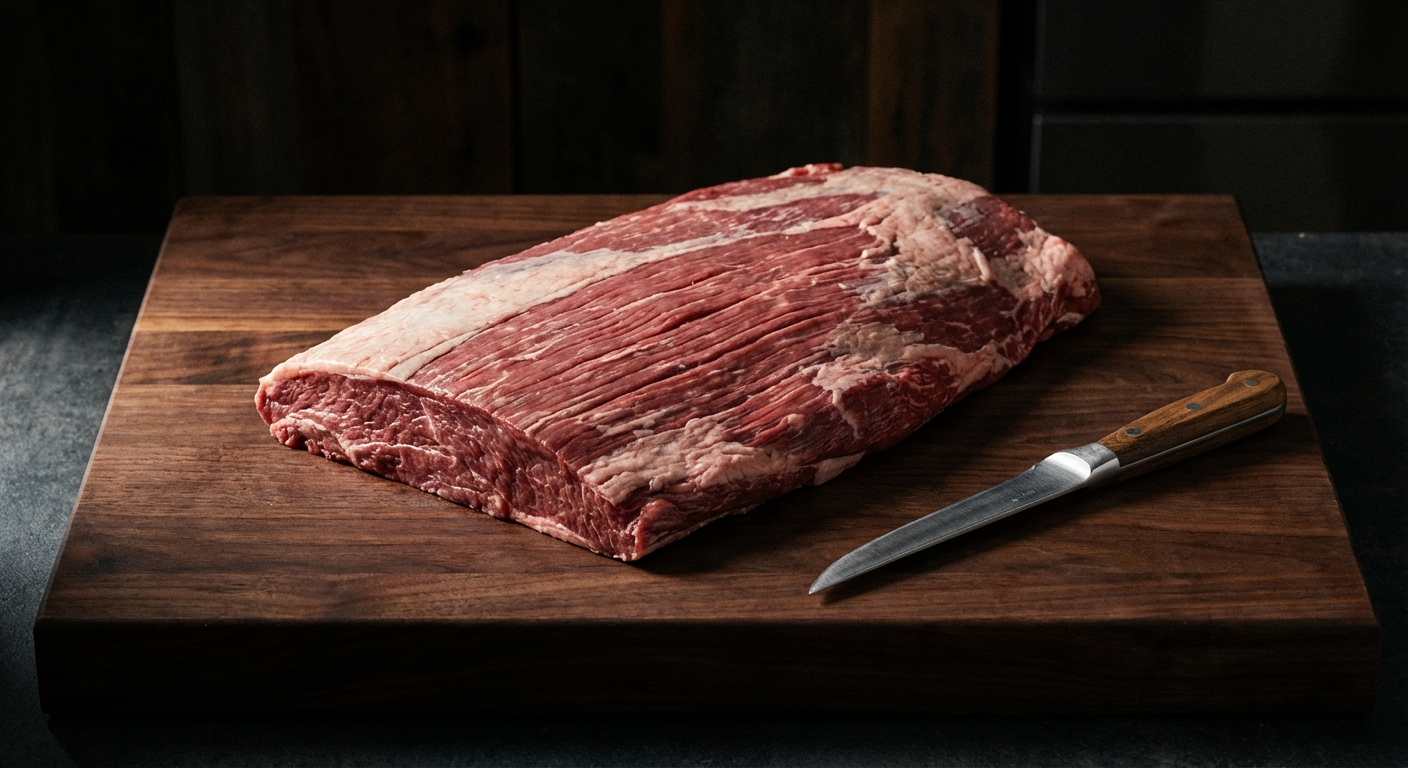
The flank primal is one of the leanest sections on the animal, but do not let that fool you into thinking it lacks flavor. Quite the opposite. The flank steak — that long, flat muscle that runs along the belly behind the plate — delivers some of the most intensely beefy flavor of any cut. It has been the backbone of fajitas, London broil, and bistro-style bavette for generations, and for good reason.
When I first started breaking down whole sides, I treated the flank as an afterthought — something to pull off and toss in the trim pile. That was a mistake. A properly separated flank primal yields a beautiful flank steak, usable trim for lean ground beef, and if you are working with a full belly section, the opportunity to capture the bavette (flap meat) that many home butchers miss entirely.
The good news is that the flank is one of the simpler primals to process. There are no bones to navigate, no complex joint articulations, and the natural seams between muscles are relatively easy to follow. What the flank demands instead is careful attention to grain direction, precise membrane removal, and smart trimming decisions that preserve the integrity of the final steak.
Understanding the Beef Flank Primal
The flank primal sits on the underside of the animal, behind the plate primal and below the short loin. It is one of the eight primal cuts of beef, though it is by far the smallest, typically weighing only 5 to 8 pounds with the flap meat included.
The flank is almost entirely muscle with very little external fat. The primary structures include:
- Flank steak (IMPS 193): The main muscle — a flat, wide cut with very prominent longitudinal grain. Typically weighs 1.5 to 2.5 pounds after trimming. Also called "jiffy steak" or "plank steak" in older butchery nomenclature
- Bavette / flap meat (IMPS 185A): Sometimes included with the flank, sometimes separated with the sirloin. A thin, loose-grained muscle that cooks beautifully when grilled hot and fast
- Silver skin and membrane: A tough connective tissue layer covering parts of the flank steak that must be removed for the best eating experience
- Lean trim: Peripheral muscle and scraps that make excellent 90/10 or 93/7 lean ground beef when combined with fattier trim from other primals
The defining characteristic of the flank is its grain structure. The muscle fibers run lengthwise along the steak in clearly visible parallel lines. This pronounced grain is both the flank's signature and its vulnerability — cut with the grain and the steak is chewy and tough. Slice against the grain on a bias and the same piece of meat becomes tender and satisfying.
Tools You Will Need
Because the flank contains no bones, your tool requirements are simpler than most primal breakdowns:
- 6-inch boning knife (semi-flexible): Your primary tool for membrane removal and trimming. The flexibility helps you work along the contours of the muscle without gouging
- 10-inch breaking knife or chef's knife: For making clean separation cuts and final portioning
- Large cutting board: The flank steak is long and flat — you need room to lay it out fully
- Kitchen towels: For gripping the silver skin membrane during removal
Sharp knives are non-negotiable here. The flank steak is relatively thin (usually under an inch at its thickest point), so a dull blade will compress and tear the meat rather than cutting cleanly. Sharpen and hone before you begin.
Step 1: Identify and Orient the Primal
If you are working with a full flank primal received from a packer or wholesaler, lay it on your cutting board with the smooth side (the side that faced the hide) facing up. The opposite side — the interior surface that faced the abdominal cavity — will show more visible membrane and connective tissue.
Identify the flank steak itself: it is the largest single muscle, running the length of the primal with visible grain lines. If the bavette (flap meat) is still attached, it will be a thinner, more loosely structured muscle along one edge, often partially separated by a natural fat seam.
Take note of which direction the grain runs. On the flank steak, the fibers run parallel to the longest dimension of the cut. You will want to remember this later when it is time to portion or when advising your customers (or yourself) on how to slice the cooked steak.
Step 2: Separate the Bavette (Flap Meat)
If your flank primal includes the bavette, separate it first. Look for the natural fat seam running between the flank steak and the flap meat. The bavette will be noticeably thinner and more irregularly shaped than the main flank steak.
Using your boning knife, follow the fat seam to separate the two muscles. Let the knife follow the natural division — do not force a straight line. The goal is to keep as much clean meat on both pieces as possible. The bavette should come away as a single, somewhat ragged-looking piece.
Set the bavette aside. It is an excellent cut in its own right — popular in French bistro cooking and increasingly valued at American steakhouses. It takes well to marinades and should be grilled hot and fast, then sliced thin against the grain just like the flank steak.
Step 3: Remove the Silver Skin
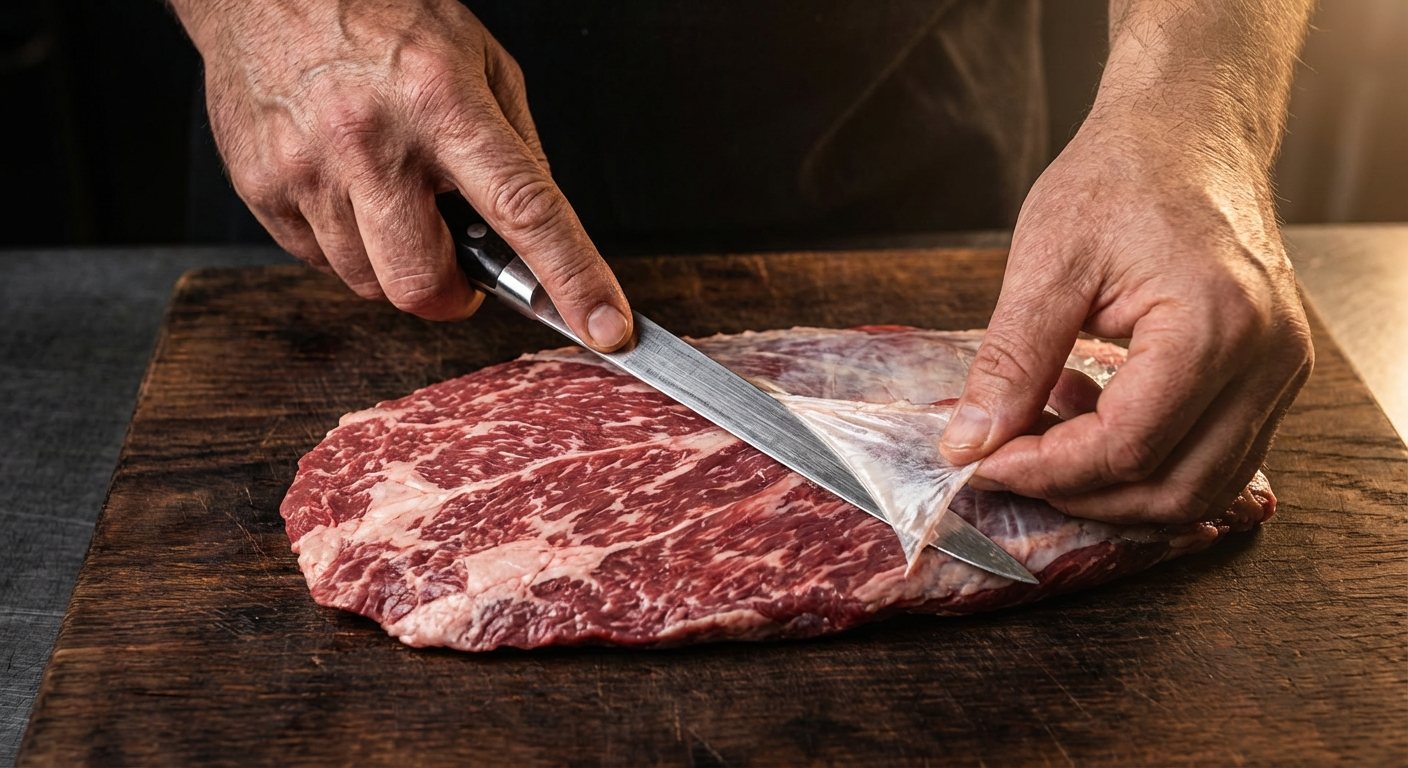
This is the most important step in the entire process. The silver skin — a thin but extremely tough connective tissue membrane — covers portions of the flank steak's surface. Unlike collagen-rich connective tissue that breaks down during cooking, silver skin remains tough and chewy no matter how you cook it. It must come off.
To remove it:
- Locate the edge of a membrane section. Slide the tip of your boning knife under the silver skin, angling the blade slightly upward against the membrane
- Free a small tab of membrane — about an inch is enough to grip
- Grab the freed tab with a kitchen towel (it is slippery) and pull it taut
- With the blade angled slightly upward toward the membrane, slide the knife away from you in long, smooth strokes. The key is keeping the blade pressed against the membrane, not into the meat below
- Work in sections. You will rarely get the entire membrane off in one pass — three or four passes is normal
A common mistake is angling the blade too steeply into the meat, which removes good muscle along with the membrane. Keep the blade almost flat, with just a slight upward angle. Speed comes with practice — it is better to go slowly and preserve meat than to rush and waste it.
Step 4: Trim the Exterior
With the membrane removed, examine the flank steak for any remaining cleanup:
- Excess surface fat: The flank is naturally lean, but there may be small patches of hard external fat, particularly along the edges. Remove anything thicker than about an eighth of an inch — a thin fat layer helps during cooking, but thick pockets will not render properly on a lean cut that cooks quickly
- Ragged edges: Square up the edges of the steak by trimming any thin, irregular flaps that will overcook and char. These go into your trim pile for grinding
- Connective tissue strands: Check for any remaining tough sinew or tendon pieces, especially near the thicker end of the steak where it was attached to the short loin area
Save all your trim. Flank trim is extremely lean — around 90 to 93 percent lean — which makes it perfect for blending with fattier trim from the chuck or plate to hit your desired fat ratio for ground beef.
Step 5: Final Portioning and Storage
A trimmed flank steak is typically sold and cooked whole — it is not a cut that benefits from being broken into smaller pieces before cooking. The whole muscle, grilled or broiled to medium-rare and then sliced thin against the grain, is the classic preparation.
If you want to portion for different uses:
- Whole flank steak: Wrap tightly in butcher paper or vacuum seal. Freezes well for up to 6 months. Label with weight and date
- Stir-fry strips: Partially freeze the steak (about 30 minutes in the freezer), then slice thin against the grain into strips. Portion into recipe-sized bags
- Pinwheel roasts: Butterfly the flank steak, fill with stuffing, roll, and tie into a roast. An impressive presentation that transforms the humble flank into a dinner party centerpiece
For the bavette, wrap and store it the same way. It is slightly more perishable than the flank steak due to its looser grain structure — use it within 3 days fresh, or freeze immediately.
Yield Expectations
The flank is a high-yield primal because there is very little waste — no bones, minimal fat, and the membrane you remove weighs almost nothing. Expect roughly:
- Flank steak: 1.5 to 2.5 pounds (the primary cut)
- Bavette: 1 to 2 pounds (if included with the primal)
- Lean trim: 0.5 to 1 pound (edges, membrane scraps with meat attached)
- Waste: Under half a pound (pure membrane and silverskin)
Total usable yield from a flank primal typically runs 85 to 90 percent, making it one of the most efficient primals to process. Compare that to a beef chuck at 75 to 80 percent yield, or a rib primal that loses significant weight to bones.
Common Mistakes to Avoid
After processing hundreds of flanks, these are the errors I see most often:
- Leaving silver skin on: This is the number one mistake. Every bit of silver skin must come off. If it is still on the steak when you cook it, the membrane contracts and causes the meat to curl and cook unevenly — and the chewy texture ruins the eating experience
- Over-trimming: The flank is already lean. Do not remove every trace of fat — a thin layer on the surface helps keep the meat moist during the intense heat of grilling. Trim the thick spots, leave the thin ones
- Ignoring grain direction: Mark the grain direction before cooking if you need to. I have seen experienced home cooks grill a perfect medium-rare flank steak and then slice it with the grain, turning a great cut into shoe leather. Always cut against the grain, on a slight bias, in thin slices
- Confusing flank with skirt: The flank steak and the skirt steak are different cuts from different primals. The skirt comes from the plate primal (the diaphragm muscle). They cook similarly but the grain patterns, thickness, and fat content are all different
Cooking Notes for the Butcher
Part of being a good butcher — even a home butcher — is understanding how each cut cooks. For the flank:
- Best methods: High-heat grilling, broiling, stir-frying, or braising. The flank excels at extremes — either very fast, very hot cooking to medium-rare, or long, slow braising to break down the lean muscle fibers
- Internal temperature target: 130 to 135 degrees Fahrenheit for medium-rare when grilling. Do not go past medium (145°F) — beyond that, the lean meat dries out rapidly
- Resting: 5 to 10 minutes after grilling, loosely tented. This is critical — the tight grain structure redistributes moisture during rest more dramatically than fattier cuts
- Slicing: Always against the grain, at a 45-degree bias, in slices no thicker than a quarter inch. This is not optional — it is the difference between a tender bite and a tough chew
The flank also takes exceptionally well to marinades. The pronounced grain structure creates channels that absorb liquid marinades more deeply than denser cuts. Even 30 minutes of marinating makes a noticeable difference; 4 to 8 hours is ideal.
Frequently Asked Questions
What is the difference between flank steak and skirt steak?
Flank steak comes from the flank primal (the belly behind the plate), while skirt steak comes from the plate primal (the diaphragm muscle). Flank steak is wider, thicker, and leaner with a tighter grain. Skirt steak is longer, thinner, more heavily marbled, and has a coarser grain. Both cook best with high heat and should be sliced against the grain.
How much does a whole beef flank primal weigh?
A whole beef flank primal typically weighs 5 to 8 pounds including the flap meat (bavette). The trimmed flank steak alone usually weighs 1.5 to 2.5 pounds. It is the smallest of the eight beef primal cuts.
Do you need to remove silver skin from flank steak?
Yes, silver skin must be removed from flank steak. Unlike collagen that breaks down during cooking, silver skin remains tough and chewy regardless of cooking method. It also causes the steak to curl during grilling. Use a sharp boning knife angled against the membrane and pull with a towel for grip.
What is bavette steak?
Bavette is the French name for flap meat (IMPS 185A), a thin muscle sometimes included with the flank primal or separated with the sirloin. It has a loose grain structure and intense beefy flavor. Cook it like flank steak — hot and fast to medium-rare, then sliced thin against the grain.
More Expert Guides
How to Trim a Brisket: The Complete Butcher's Guide
Proper brisket trimming is the difference between a backyard experiment and competition-quality results. Here is the professional technique for shaping a whole packer brisket before it ever touches the smoker.
14 min readHow to Butcher a Whole Chicken: Step-by-Step Guide
Breaking down a whole chicken yourself saves 40-50% compared to buying individual parts. Here is the professional technique for turning one bird into perfectly portioned pieces.
14 min readHome Butchering Safety Guide: Essential Protocols for Safe Meat Processing
Learn professional butchering safety protocols from a master butcher with 25+ years of experience. Essential guidance for anyone processing meat at home.